

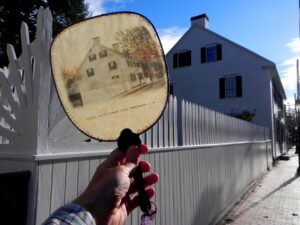
Portsmouth has more authentic historic houses open to the public than American cities many times its size. Since the Victorian-era visitors have been taking home nostalgic reminders of their trips to “the Old Town by the Sea.”
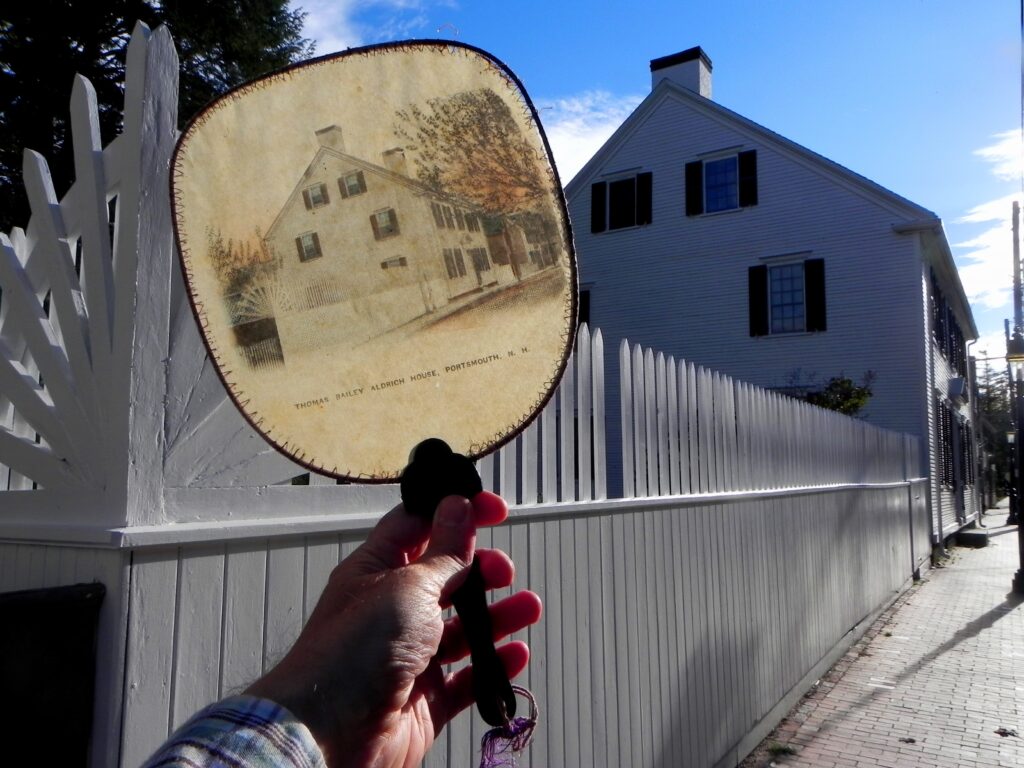
This souvenir fan was cheap and often manufactured in Europe and shipped back to the USA for sale. These collectible items usually included a picture of the historic location bent into some utilitarian purpose – an ashtray, candy dish, mug or glass, postcard, plate, calendar, or paperweight. Most sites depicted on Portsmouth souvenirs are still standing – a testament to the hundreds of volunteers and benefactors who have kept the city’s historic treasures intact by creating a host of nonprofit groups. This photo shows a souvenir fan from the early 20th century with a handle made of Bakelite, patented by Leo Baekeland in 1917.
The paper fan was imprinted with a photo of the Thomas Bailey Aldrich House on Court Street. The photo was then cut and hand-stitched within a metal wire hoop. The shrine to the Portsmouth author was NH’s first historic house dedicated by Mark Twain in 1908, and now part of Strawbery Banke Museum. As you can see, more than a century later, the house and fence remain unchanged. The interior has been restored to the mid-1840s when Aldrich lived here as a bad little boy.
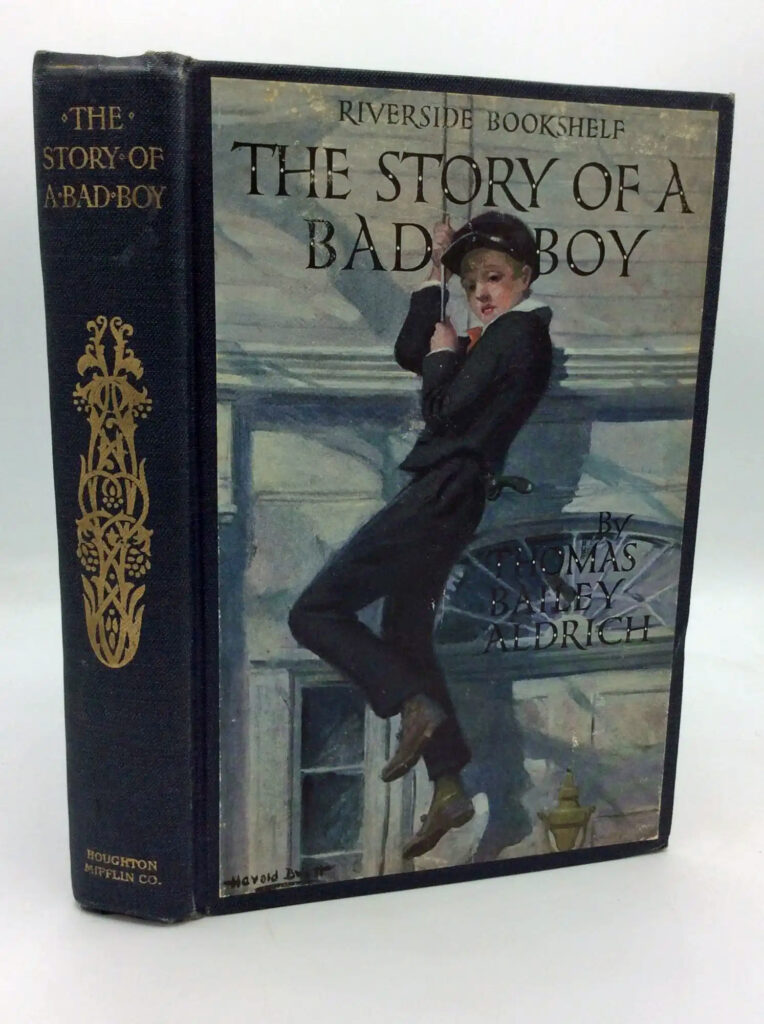
When this fan was originally purchased, The Story of a Bad Boy by Aldrich was well known across the country. Our collection of the book (don’t ask me why) contains 30 different editions of the Aldrich classic. Today, except in Portsmouth, NH, the work is obscure. Both Aldrich and his friend Mark Twain were influenced by Portsmouth-born BP Shillaboer and his their of the “human boy,” who should be allowed to fill his childhood with danger, error, and experimentation, and never coddled. The Aldrich House also served as Portsmouth’s first cottage hospital before it was repurposed as a historic house museum. (Photo by J. Dennis Robinson)
 Would NH Be Here Without Pocahontas?