


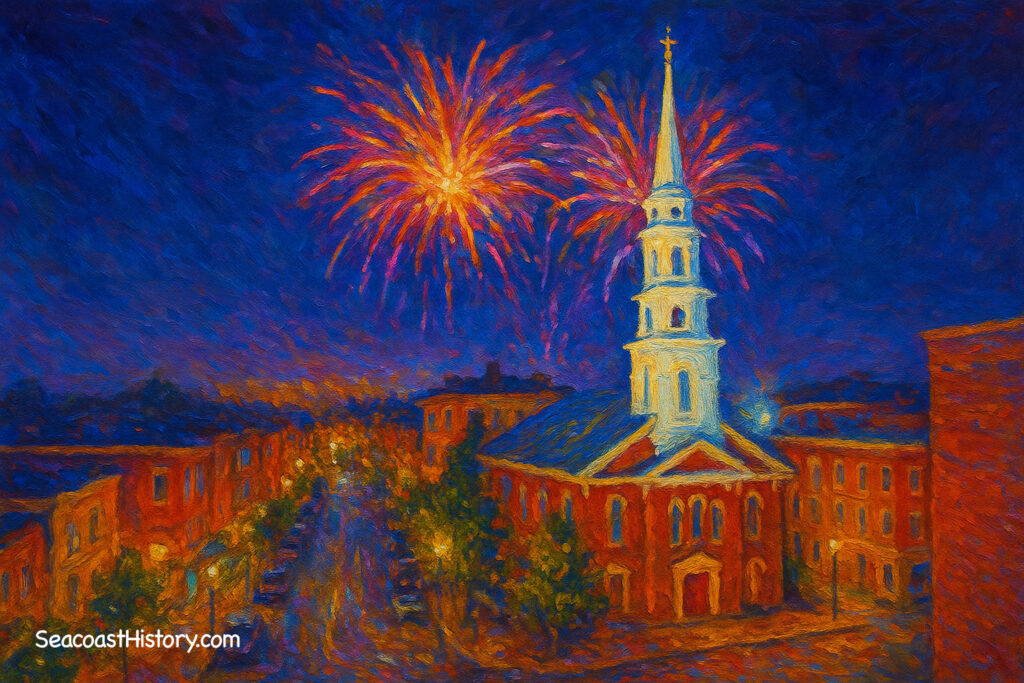
Why do we celebrate the birth of our democracy with violent, noisy explosions in the night sky? Why not rejoice with peaceful vigils? Because we’re Americans, dang it, and if you don’t like fireworks, you must be some sort of commie terrorist.
Portsmouth has a long bang-up tradition of celebrating Fourth of July. We did, after all, kick out the New Hampshire colony’s royal governor months before the American Revolution began. Our own William Whipple signed the Declaration of Independence that was first read from the steps of the Old State house in Market Square on July 18, 1776.
A year later on July 4, 1777, Captain Thomas Thomson, whose house still stands on Pleasant Street, invited guests to celebrate with dinner aboard a Continental frigate. Ten days later the Continental Congress sent John Paul Jones to Portsmouth to captain the sloop of war RANGER. Returning victoriously to this city in 1782, Jones threw a July 4th party for the entire city at his own expense with toasts, salutes, and dancing aboard the USS AMERICA then being built at Kittery. There were plenty of fireworks, of course.
But gunpowder is dangerous even in peacetime. Seven soldiers at Fort Constitution in New Castle were blown to kingdom come on July 4, 1809 while preparing for a holiday salute. Someone apparently left 17 damp cartridges out to dry in the summer sun. A spark driven by the wind set off the explosion. Pvt. Peletiah McDaniels was thrown over the ramparts to the base of the lighthouse. Body parts rained on a nearby home.
A history of the Fourth shows attempts all across the country to ban dangerous ammunition and explosive toys from use. They have driven presidents to duck from an imagined assassin’s gunfire. Fireworks often sent carriage horses into a rampage. And who among us hasn’t got a fireworks horror story from grade school to share?
I remember a kid in fourth grade who swore he could hold a lit “lady finger” while it exploded. He did it with an open palm and we were amazed. Then one day he closed his fist at the critical moment. When he returned to school in the fall, one of his fingers stayed behind.
Kids have lost their hearing playing with fireworks. Kids have lost their eyes. One of my cousins used to shimmy up a tree that hung over the road in front of his house and drop firecrackers into the back of passing trucks. When the drivers stopped to check on what-sounded-like a blown out tire, he nearly fell from his tree laughing. He graduated to cherry bombs in frogs, then went on to become a nurse and a Pinkerton detective.
Bad boys go boom
Nineteenth-century author Thomas Bailey Aldrich wrote about being a bad little boy in Portsmouth prior to the Civil War. Kids in his class, he recalled, were fixated on fireworks. Aldrich attended school at Portsmouth Academy, now Portsmouth Historical Society. In his novel The Story of a Bad Boy Aldrich wrote:
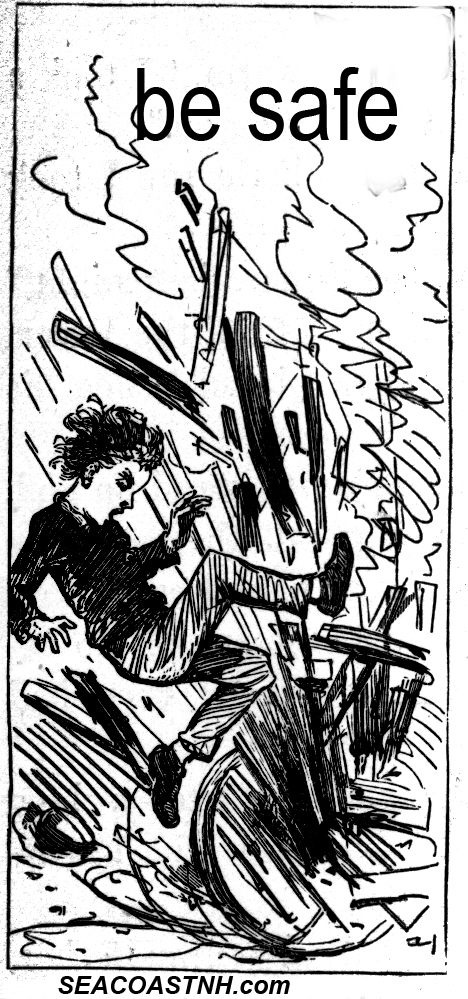
“There was very little hard study done in the Temple Grammar School the week preceding the Fourth of July. For my part, my heart and brain were so full of fire-crackers, Roman candles, rockets, pin-wheels, squibs, and gunpowder in various seductive forms, that I wonder I didn’t explode under Mr. Grimshaw’s very nose …This was not alone my condition, but that of every boy in the school.”
Tom Bailey’s teacher, however, had been a boy too. Mr. Grimshaw adapted the “temporary distraction” of his students by relating all their lessons to fireworks. “The class in arithmetic, for instance,” Aldrich wrote, “was requested to state how many boxes of fire-crackers, each box measuring sixteen inches square, could be stored in a room of such and such dimensions.”
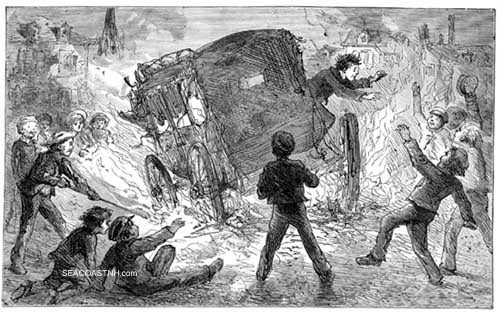
Readers will recall that in Aldrich’s famous novel the Portsmouth town fathers banned the use of fireworks on the Fourth of July in 1847. In protest, Tom Bailey and his gang set an old stagecoach ablaze in the middle of Market Square. Boys will be boys. The story appears to be based on historic fact.
A few years later, according to the local newspapers, a boy from the Isles of Shoals was killed during a Portsmouth fireworks display. Across the country Fourth of July annals are filled with reports of accidental injuries and deaths from amateur pyrotechnics. One 19th century New Hampshire patriot blew off his left arm while tamping down a canon for a ceremonial volley. The festivities went on as planned.
The explosive 20th century
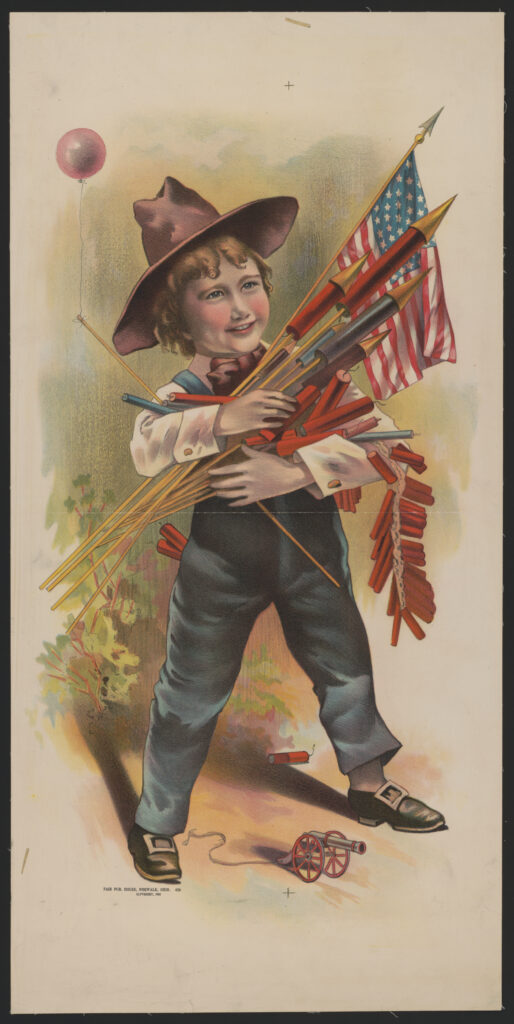
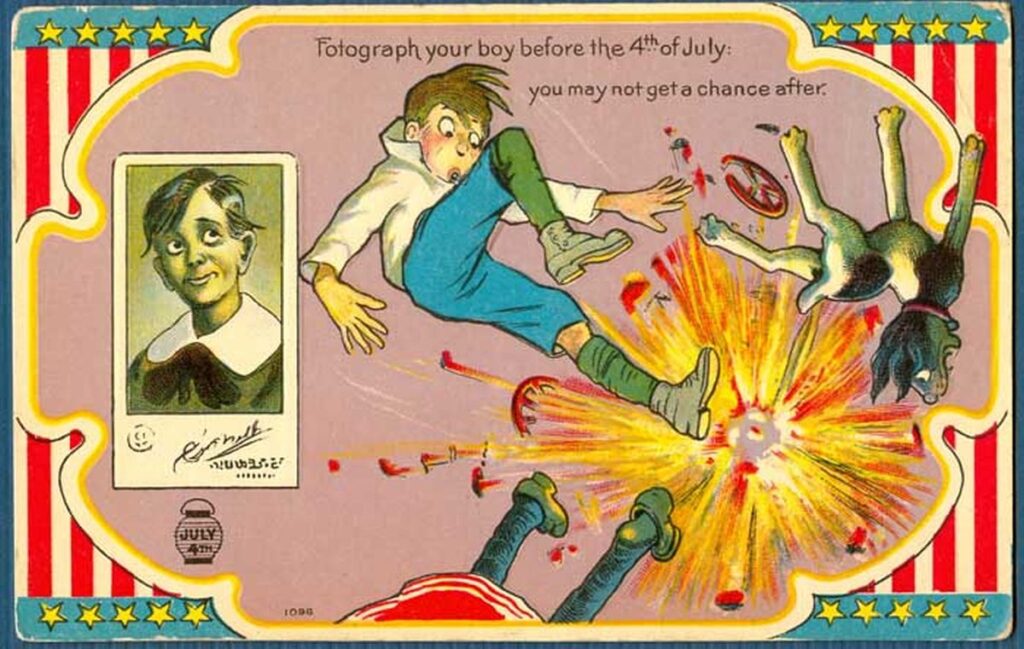
But how can we blame the kids? Ours is a history of heroism defined by endless wars, cowboys shooting Indians, G-men shooting mobsters, and vice-versa. Turn-of- the-century postcards made the most of the link between little children and fireworks. Colorful holiday images frequently depict smiling kids riding giant rockets or hugging big dynamite-shaped explosives on cards reading “Happy Fourth of July”.
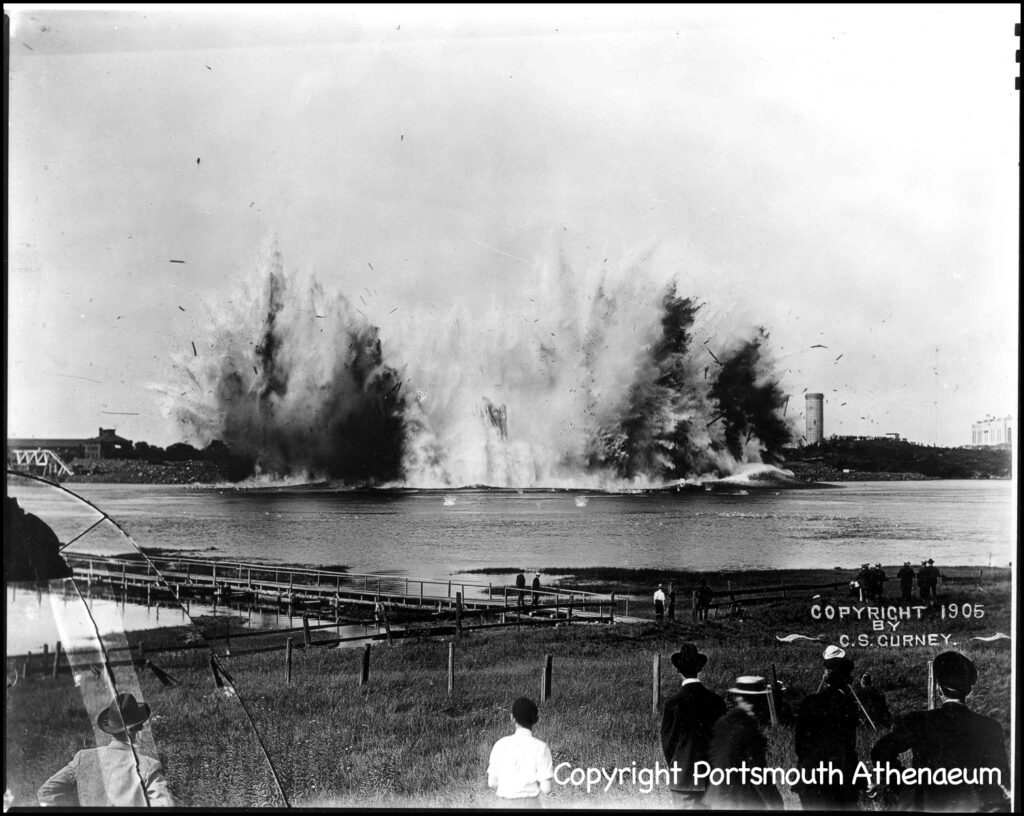
In 1905 Portsmouth adults set off the largest dynamite explosion then recorded when we blew up a spit of land in the Piscataqua River called Henderson’s Point. The explosion improved navigation and drew thousands of tourists. The Frank Jones Brewery handed out brochures listing where to get the best view of the blast, and where to get the best beer afterwards.

A 1908 cover story in the Portsmouth Daily Herald rambles on about the danger of fireworks capable of blowing a man to pieces. These items, the reporter notes, should probably not be sold in the stores. But the article is most critical of new-fangled noisemakers that, in the hands of marauding Portsmouth boys, have been keeping decent citizens awake. The kids tied large brass cowbells to strings and sticks to create a hellish Fourth of July racket. Worse, according to the newspaper, was the introduction of blank cartridges for guns of all sizes. The loud repeated explosions were enough to wake the Revolutionary war dead.
But read a little further into the same 1908 newspaper and what do we find? Look right below the notices for upcoming parades, sailing regattas and Navy Band concerts. There the newspaper ad reads: “BLANK CARTRIDGES, REVOLVERS and COW BELLS for the 4th of July at AP Wendell & Co., 2 Market Street.” Business is business, then as now.
(Copyright Portsmouth Athenaeum Collection)
A century ago
Today the city bans all fireworks, including “Class C sparklers” on Fourth of July. But explosions still snap, crackle, and pop from every corner of town. Portsmouth’s love affair with fireworks may have reached its climax on July 4, 1910. One century ago this little-known “Return of the Sons and Daughters” celebration began with an enormous parade at 10 am and concluded with a colossal nighttime display beginning at 8 pm on South Playground. Who needs Imax, 3D movies or HD-TV with a show like this one?
The official published guide to the “grand display of fireworks” filled an entire page, listing each thrilling moment in advance. The opening national salute of 13 rifles, city planners promised, would “echo for miles.” The display grounds were then illuminated by 25 electric lights “throwing a crimson glow over the entire surroundings.” Following the introductory salvo of six heavy exhibition rockets, Portsmouth spectators gasped as a chain of hanging lights suspended by parachutes changed colors while drifting into the distance.
But that was just the beginning. An immense arch of prisms hanging 100 feet in the air produced a dazzling rainbow of effects. Silver rain rockets threw down showers of flame and fire. Immense colored “aerolites” were followed by cannon bombs and explosions in the shape of fiery dragons, sea serpents and glittering birds. Next came the “Italian sunset” — an effect comprised of rapidly revolving zones of gold emerald and ruby flames.
And on and on it went through mammoth meteor showers, a flaming “daddy long legs,” Japanese suns, weeping willow trees, floral clusters, loud detonating twisters, shimmering fountains, an opening fan, fire balls, balloon lights and, at last, the “National Saluting Bombs” of red, white and blue.
At last, with the entire fairground fully illuminated, Portsmouth watched in awe at the sight of two great Corinthian columns hung with angel wings and bathed in light rising into the sky. Suddenly immense letters appeared between the columns that read “Portsmouth Welcomes Her Sons and Daughters.” And in a final burst of sound and light the words GOOD NIGHT!
Although the July 5 newspapers raved about the spectacular patriotic display, readers later worried in letters-to-the-editor about the cost of children wounded by toy explosives or found “dead drunk” in the streets after the party ended.
Copyright © 2010 by J. Dennis Robinson, all rights reserved
 NH Publisher Lured Charles Dickens Back to America