

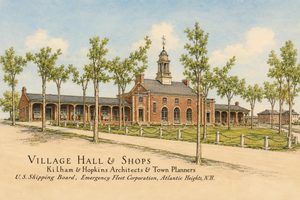
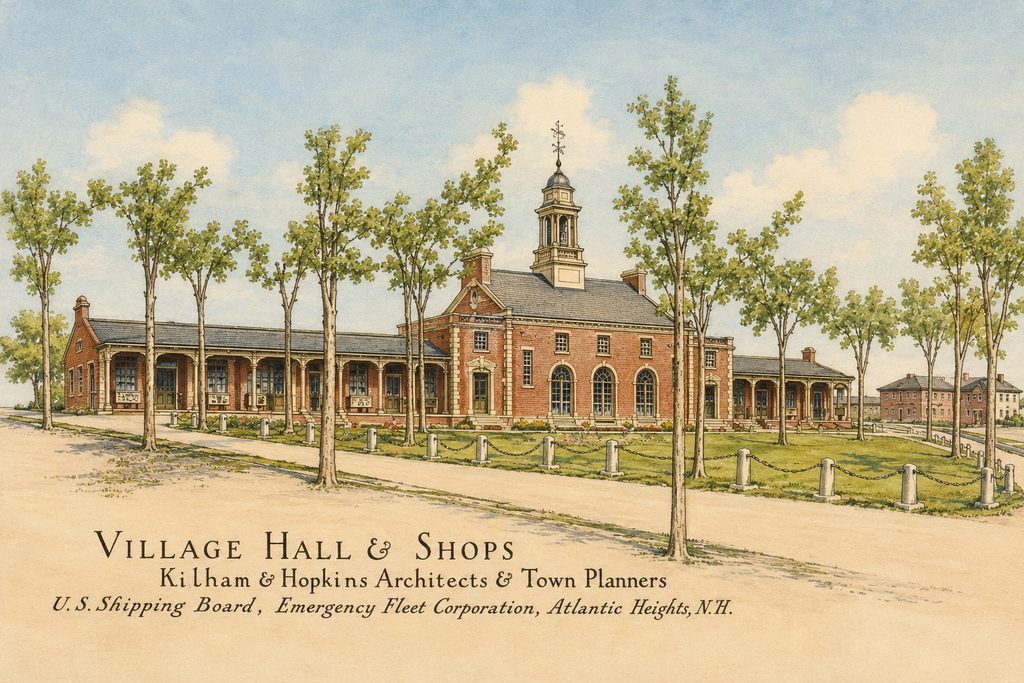
The entrance to Atlantic Heights looks unfinished because it is. As World War I ended, so did construction of the historic Portsmouth, NH, neighborhood. Massive metal ships were no longer needed, nor were hundreds of new workers who had just moved to town. The Atlantic Corporation, a shipbuilding company, closed, and the nearby federally funded low-income housing project wrapped.
READ: Architecture for the poor
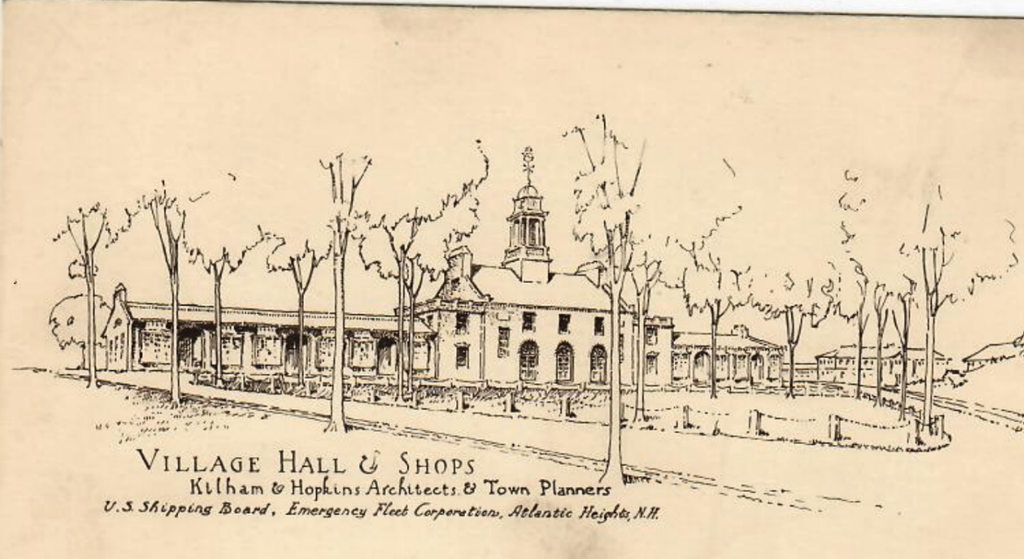
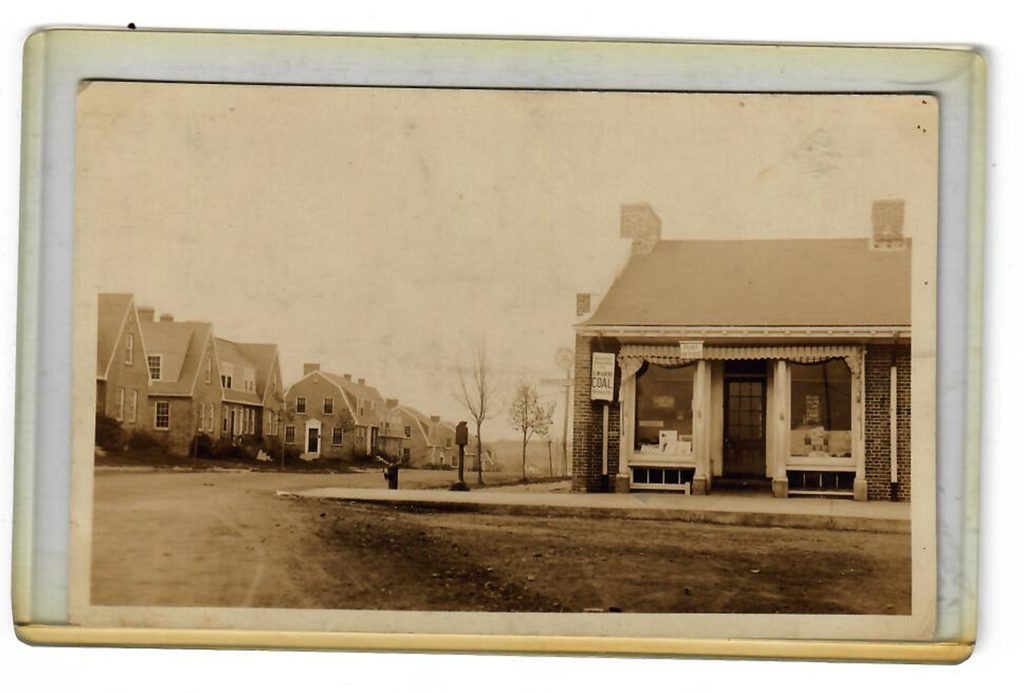
Work stopped on the “Village Hall,” an extended brick storefront that greeted visitors entering the cluster of modest homes that ran down to the Piscataqua River. Each street—Raleigh, Crescent, Concord, Falkland, etc.— was named for a ship built in the region.
A postcard, discovered in an online auction by community resident Kevin Lafond, offers a rough sketch of the early plan. It appears to take it’s design from images of the Old State House that once stood in the center of Portsmouth’s Market Square. Historian Richard a Andre says the Village Hall was imagined as a recreation center for a neighborhood of ship workers. It would have been ideal for dances, meetings, concerts, and lectures in an age decades before television. Local shops on either side would have completed the complex. Only the left side of the building on Kearsarge Way was completed.
Thanks to Kevin Lafond. For much more, read Atlantic Heights: A World War I Shipbuilder’s Community by Richard M. Candee, Portsmouth Marine Society Press, 1985.

 Chatting with the Gravedigger in New Castle
