


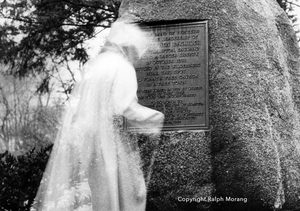
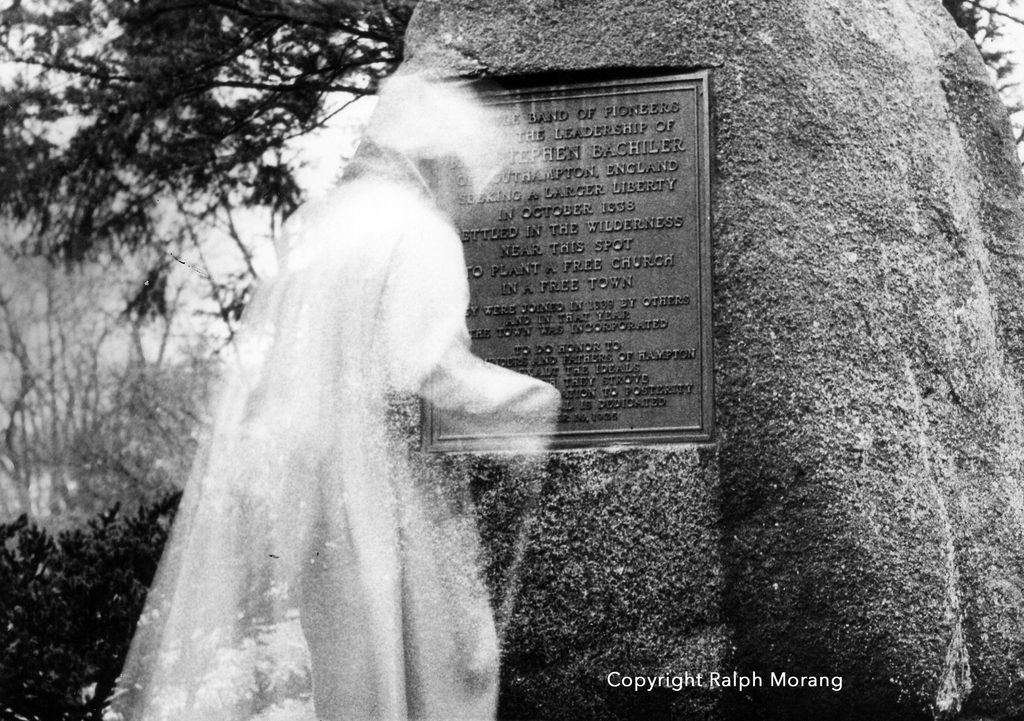
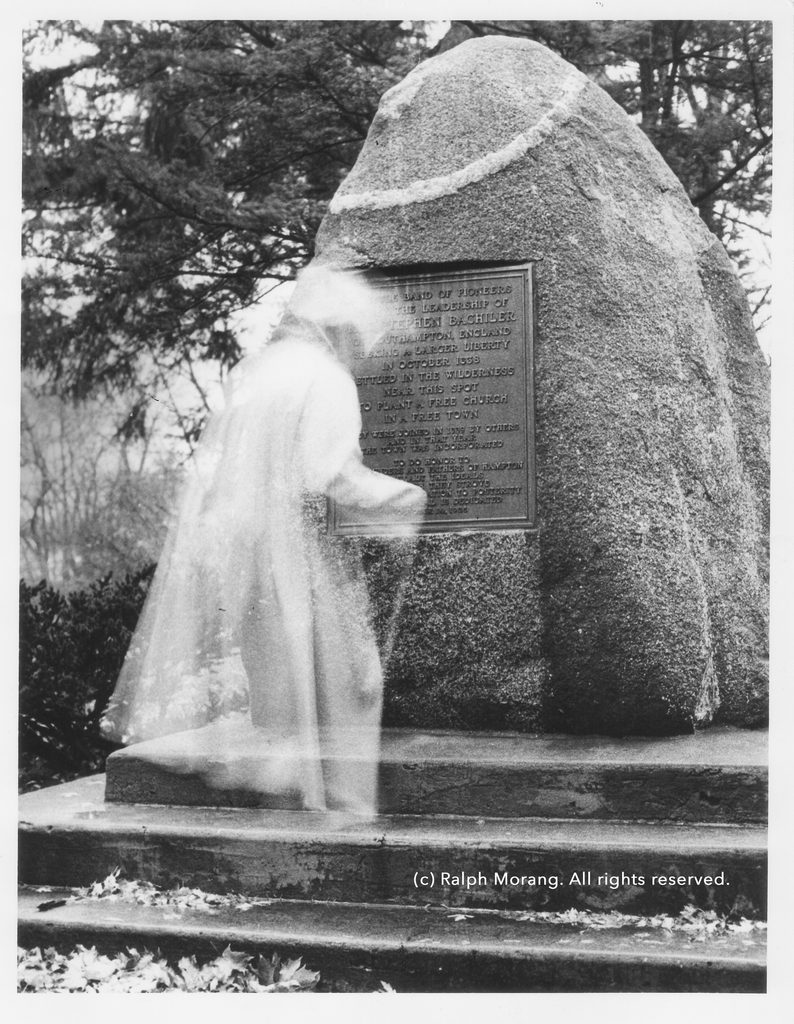
This is not the ghost of Goody Cole hovering over a memorial in Hampton, NH. It is a double exposure, created on purpose in the darkroom or in-camera to illustrate an article about the exploitation of Eunice Cole by her 17th-century neighbors. If I recall, it was my editor, Ann Moore, who posed for this classic photo by Ralph Morang for the Hampton Union. Creating art to attract readers is as old as hieroglyphics. There was no intent here to deceive, but there is always the risk that a manipulated image will be misunderstood or misused.
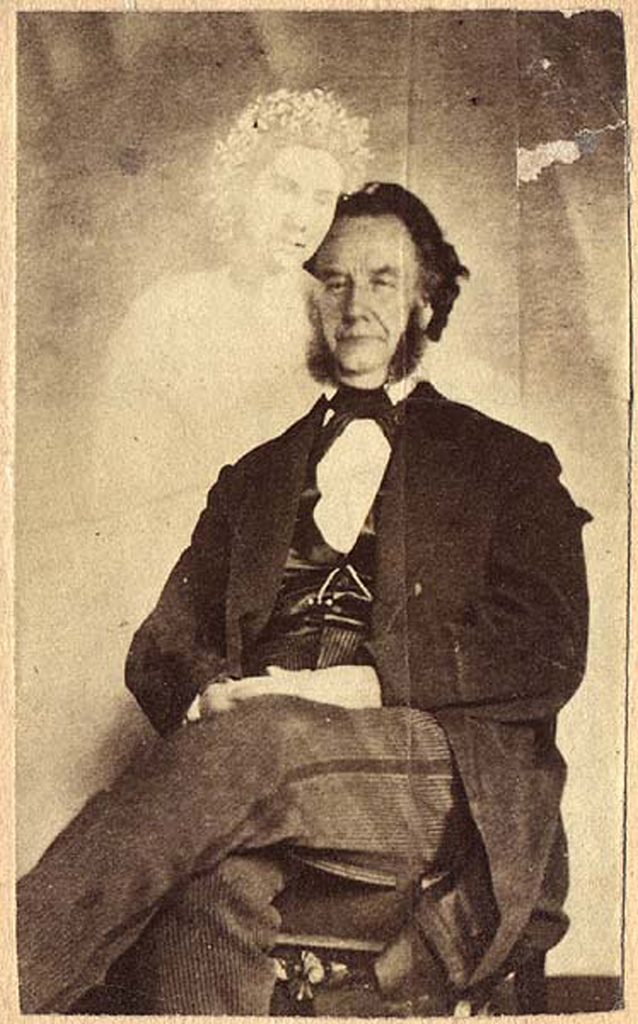
Take, for instance, the work of William H. Mumler (1854-1884). In the genre of modern TV ghost hunters, Mumler promoted his “spirit photographs” as the real deal. He claimed to have captured images of deceased souls on film. His lucrative work attracted many Victorians in an age, following the death of thousands in the Civil War, when Spiritualism was popular.
Mumler was tried in court with none other than showman PT Barnum accusing him of larceny. Barnum, for the record, charged museum visitors to view his Fiji Mermaid, a mummified monkey torso sewed to a fish tail. Some argued that Mumler was taking advantage of people suffering from the death of a loved one. Some experts concluded that Mumler’s work, including a ghostly image of Abraham Lincoln hovering above his wife, Mary Todd, was authentic.
That was then, but technology doesn’t pause. We are moving into an era when, due to generative AI and deepfake imagery, seeing is no longer believing. Are manipulated images still important tools for creating artwork that attracts readers and promotes quality education? For sure. But will the same tools be used to sow confusion and blur the lines between fact and fiction? Absolutely. Fire warms and fire destroys.
(c) 2026 J. Dennis Robinson. All rights reserved.
 Strange Halloween Characters from Seacoast History
