

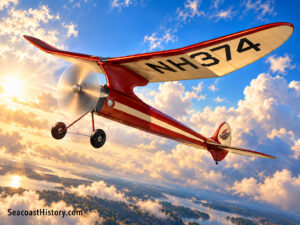

What do you buy for a man in his mid-80s? “Don’t worry about me,” my father would say. “Get your mother something nice.”
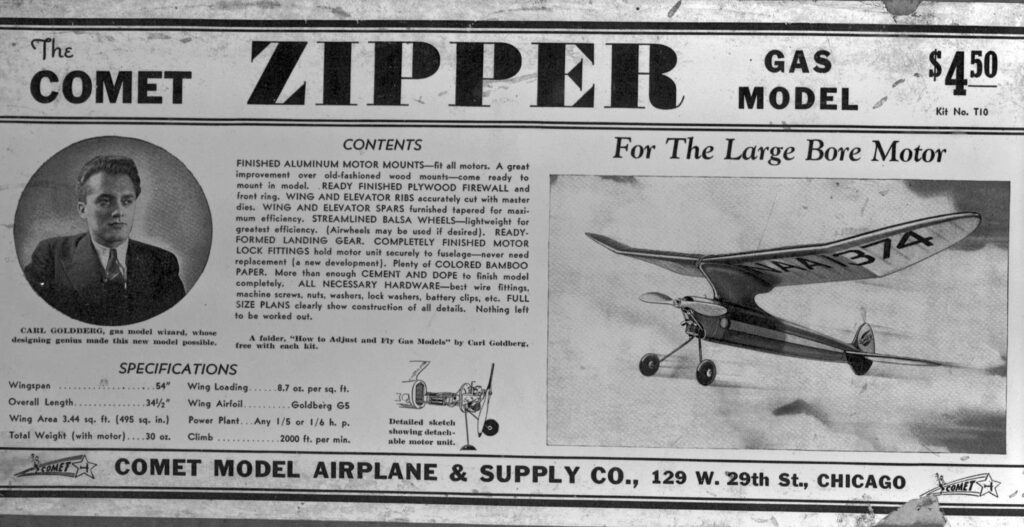
A framed photo hanging above my father’s basement workshop gave me an idea. It showed a sleek, 1930s-era model airplane made of balsa floating on pontoons. The black-and-white picture, not much bigger than a playing card, had been there for decades.
The Comet Zipper, Dad explained, was special. It was his first motorized model. Before that, he made only airplanes powered by rubber bands.
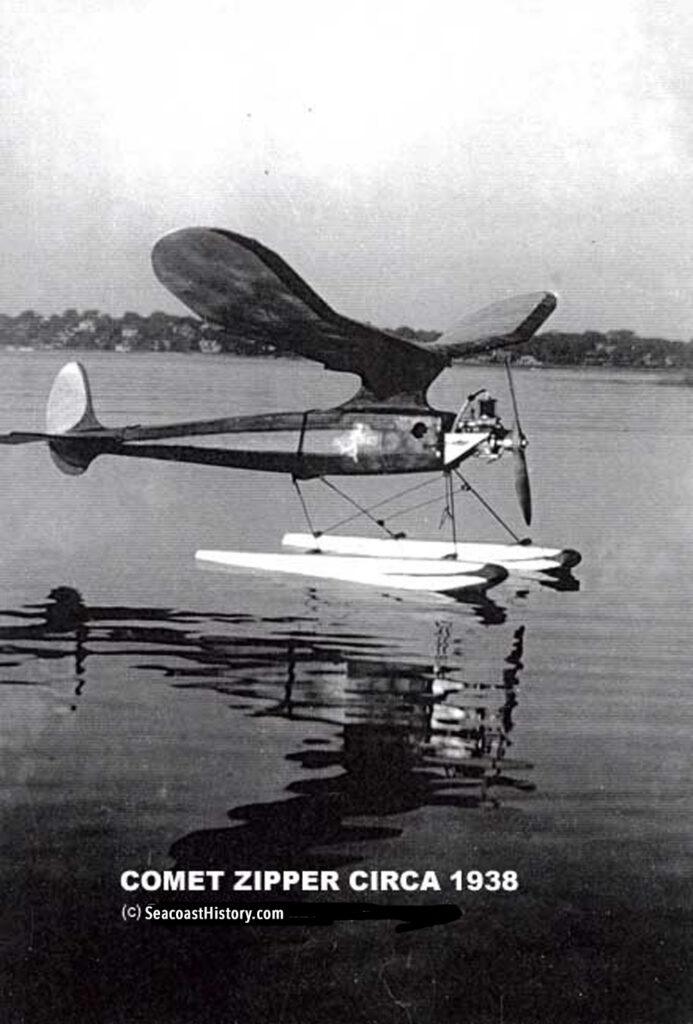
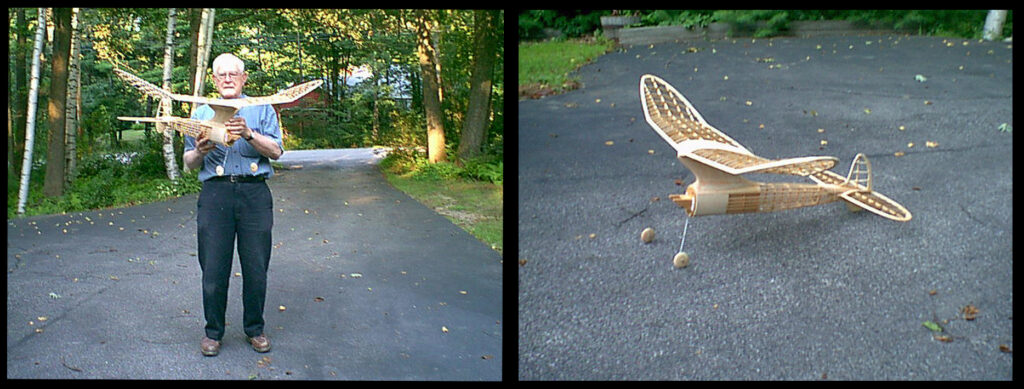
A year of searching passed before I found a duplicate model on eBay. The vintage Comet Zipper arrived in cherry condition, still in its original cardboard box. The fold-out paper instructions showed a 45-inch wingspan.
The kit originally sold for $4.50, not including the large bore gas engine. I paid a ton for mine. My father built his first Comet Zipper at age 16. He built the second one at 86.
“All I ask,” I told him, “is that you jot down any memories that bubble up while you work on it.” I was looking for the boy behind the man, before the war, the family, and the career.
There’s a thriving marketplace for hobbyists who want to build antique models. You can buy reproduction kits, but this one was almost as old as the man who assembled it. No plastic. No twist-off pre-made parts.
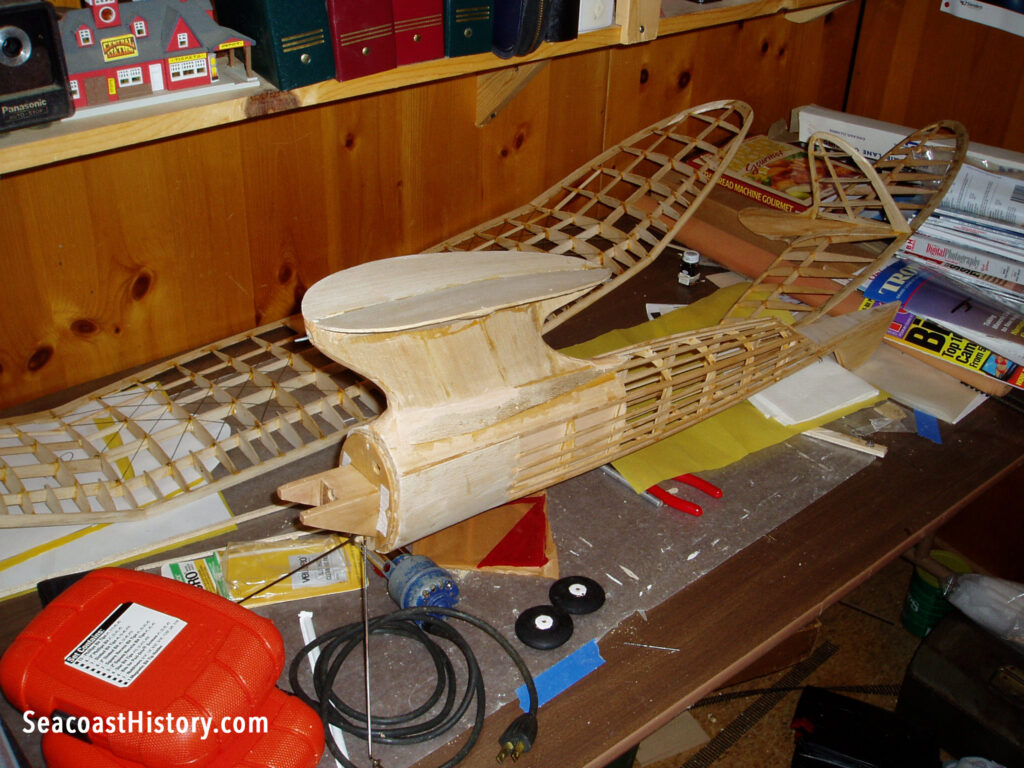
Constructing the balsa skeleton, then gluing on the paper skin took ages. Modelers in the 1930s had to carve the airplane wheels from a solid block of wood. You had to be skilled and resourceful and patient. You didn’t just assemble the parts, you crafted them.
“Everything about the model was the same,” my father said when I checked back in. “Making it was very nostalgic.”
My father explained how, as a teenager, he bartered with the hobbyshopkeeper. In exchange for the $20 gas engine, he built a dozen demonstration models for the store. He got the rest of his money manning a stand selling fresh corn at Cape Cod during the summer. That would have been 1938. Dad was a high school sophomore. Germany had not yet invaded Poland.
My father was raised by his grandparents. From April to October they visited a bare wooden cottage near Falmouth, Massachusetts. The salt air soothed my father’s boyhood allergies and “recharged the batteries” of his ailing grandfather.
That connection to the sea, passed on from generation to generation, is embedded in me. I’m rarely far from the ocean. I can see the Piscataqua River out my window even now. My father earned a dollar a day running a neighbor’s roadside stand at Cape Cod. This was a story I had not heard. He squirreled away his income for model parts. In summer, his grandparents lived almost entirely off the bounty of the sea. The Comet Zipper was doing its work. The details came flooding back. Dad said:
“We had clams, quahogs, oysters, scup, bay scallops, flounder and, of course eels, at all times,trapped in pots just 30 feet from the cottage.”
-“Grandpa would clean and skin the eels, cut them into six-inch pieces, and put them on ice in the refrigerator. Fresh pan-fried eel is delicious, but grandmother found it took at least 24 hours on ice before the eel’s nervous system calmed down enough to prevent them from flipping themselves out of the frying pan when heated.”
I inherited the family frugality and can live on fumes, a critical skill for any full-time writer. I carry one credit card and no debt. I don’t drive a car. I did not, however, inherit a taste for eel.
When my father wasn’t building model planes, he read everything from novels and newspapers to magazines and manuals. He read the classics and the comics, science fiction and science fact. It turned him into a storyteller.
The bare-ribbed skeleton of the second Comet Zipper hung for years above my father’s workbench. Like so many of his projects, it was never quite finished; it never flew. But the stories it unlocked took wing.
And what happened to the first Comet Zipper built by the teen soon to become a Marine at Iwo Jima? I’ll let my father finish the story, as he told it to me one day.
-“Most people were into free flight models in those days, not gasoline engines that were noisy and dangerous. To fly the Comet Zipper, you set it to go in a circle and never on a windy day. You only put in 20 seconds’ worth of fuel. That was important because there was no radio control to guide it back. It would climb 150 feet, circle around, and land right back at your feet. I flew that a hundred times on its wheels, on skis in the winter, and on pontoons in the water.”
“Well, your Uncle Henry had a really good camera that I wanted, and I had the Zipper, so one day we traded. He filled the engine with fuel, forgot to cock the tail, and let her go. The plane took off, flew over the tops of the trees, and disappeared. We never saw it again.”
“Henry had that plane for a very short time,” my father said, savoring the memory. “It’s been another 70 years or so since he let that airplane go. I used that camera all through the war and when you kids were growing up. Now Henry’s gone too, but I still have his camera.”
SEE: Dad at 102
© 2007, revised 2026 by J. Dennis Robinson. All rights reserved.
 Miss Nancy Underhill Swept Off Star Island in 1848?
