


A history of Portsmouth is, in large part, a history of religion–its churches and its religious leaders. But we don’t talk about them much these days. Although the city was founded on fishing, not freedom to worship, Portsmouth became a hub of religious activity. The Portsmouth Athenaeum collection is rich with published sermons.
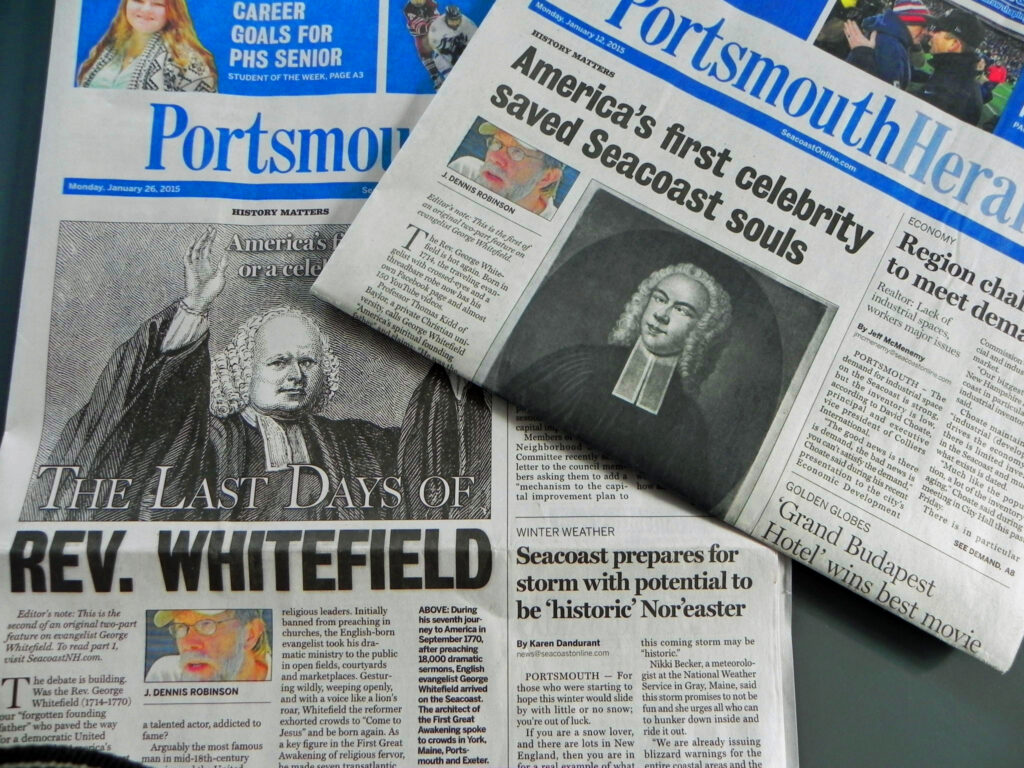
Years back, I got hooked on itinerant minister George Whitefield (1714-1770), arguably the most famous cleric who ever preached here. An early “born again” evangelist, some modern historians are calling him the “forgotten founder” of revolutionary America. He reportedly inspired Benjamin Franklin. Whitefield also inspired New Castle, NH minister Benjamin Randall to found the Freewill Baptist church.

Whitefield gave his next-to-last sermon in Portsmouth, NH and then died at nearby Newburyport, MA, where his bones are still (sort of) on display in the crypt below the sanctuary. His bones were visited by soldiers headed to attack Canada during the Revolution. Legend says one bone was stolen and returned. The skull on display in Newburyport is a reproduction.
A full-blown film (The Great Awakening) about George Whitefield was released during Easter in 2026. As soon as the streaming rate drops to my price level, I’ll watch and review it for you. The man fascinates me, which is probably why I noticed the little item in today’s Vintage Pic column.
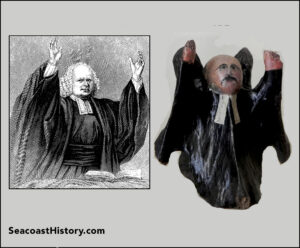
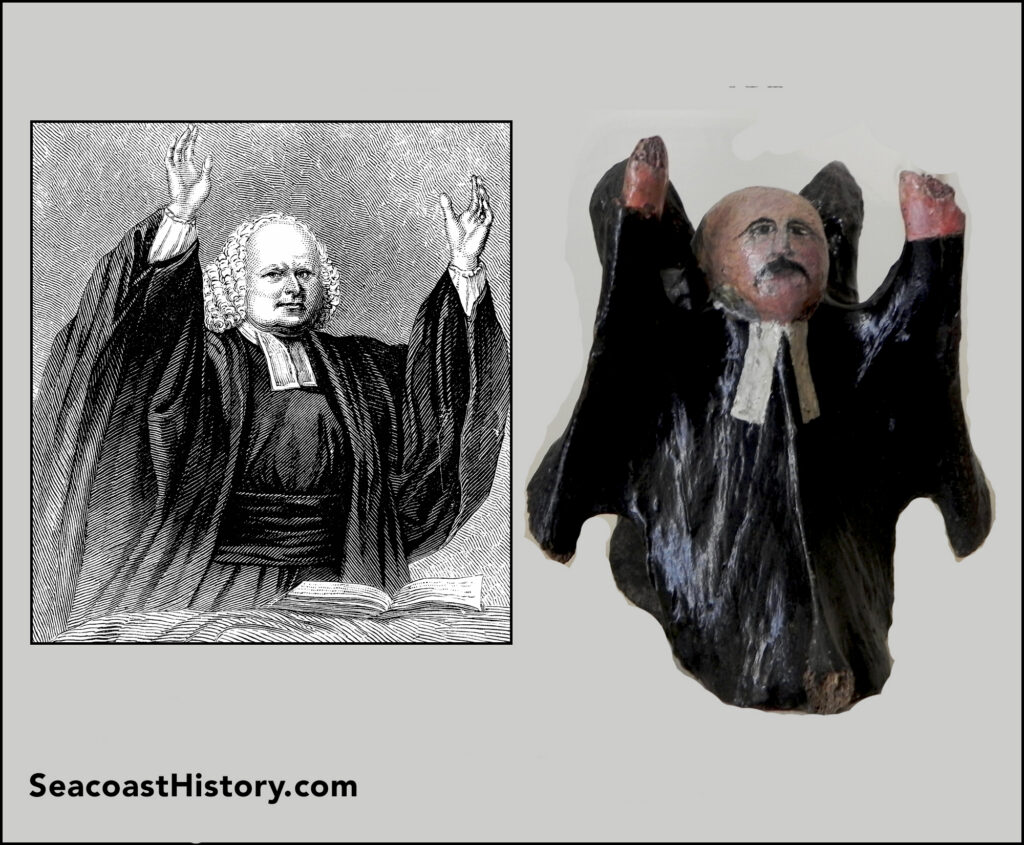
This weird painted sculpture (on the right) sits in a Newburyport museum case. It is made from a fishbone. It shows Whitefield in his characteristically dramatic pose, arms raised. He often wept openly as he preached his message of Christian redemption to huge crowds, often outdoors. British-born, Whitefield made seven trips to the American colonies, but he died just shy of the American Revolution that, some believe, he helped to encourage.
(C) J. Dennis Robinson, 2026
 Dorothy Vaughan: The Woman Who Saved Portsmouth