


In 1981, according to the NH Times, Portsmouth evolved from “a dingy little seacoast enclave” into “the most exciting town in New Hampshire.” The NH Times, an excellent “underground” weekly that died in 1986, was not the first publication to trumpet what has become known as the “Portsmouth Renaissance.” As far back as 1977, the Boston Globe made a similar observation.
“A bit of a backwater for more than a century,” the Globe proclaimed, “Portsmouth has had a renaissance in recent years, rediscovering itself and changing from an oversized museum town into a lively year-round city.”
For those of us “carpetbaggers,” as the Portsmouth Herald liked to call new arrivals in the 1960s, 70s, and 80s, this was an exciting and promising era. Discovering Portsmouth was like stumbling into an ancient but dilapidated kingdom. It was beautiful, but broken, and in need of repair. For long-time residents, especially those in poorer neighborhoods, the revival was more like an invasion. Uprooted by urban renewal and rising property taxes, many natives were embittered by the so-called “Renaissance” and the gentrification and tsunami of tourism that followed.
Salvaging history
I didn’t cull those quotations from the internet. They were transcribed from yellowed newspaper clippings stored in my battered metal filing cabinets. As a freelance reporter I was on the scene, notebook in hand, for many of the key stories that shaped the Renaissance years – an era that is winding down even now.
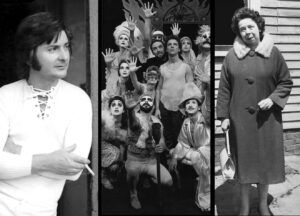
By the time I filed my first Portsmouth story back in 1972, the seeds of change were well planted. Three grassroots events had already captured the attention of reporters from outside the region. First, In 1957, librarian Dorothy Vaughan famously warned the men of the Portsmouth Rotary that – if the city continued to tear down its unique historic buildings, Portsmouth was doomed to become “Anywhere, USA.” Vaughan was, in fact, only one of a series of speakers who promised local businessmen that preservation would attract tourist dollars and help revive the city’s flagging economy.
Vaughan and others sparked the 1958 creation of Strawbery Banke Inc, in which roughly 30 early Portsmouth houses were saved by federal decree. Newer houses, meanwhile, were razed, junkyards cleared away and low-income Puddledock residents were displaced.
In May 1959, the prestigious Christian Science Monitor took notice of the city’s early effort to reinvent itself. The headline, however, barely hinted at things to come. It read: “Portsmouth Slum Clearance Marks New Era.” The 10-acre campus of Strawbery Banke Museum, which did not officially open until 1965, would become the first of three pillars in the Portsmouth Renaissance.
The new nightlife
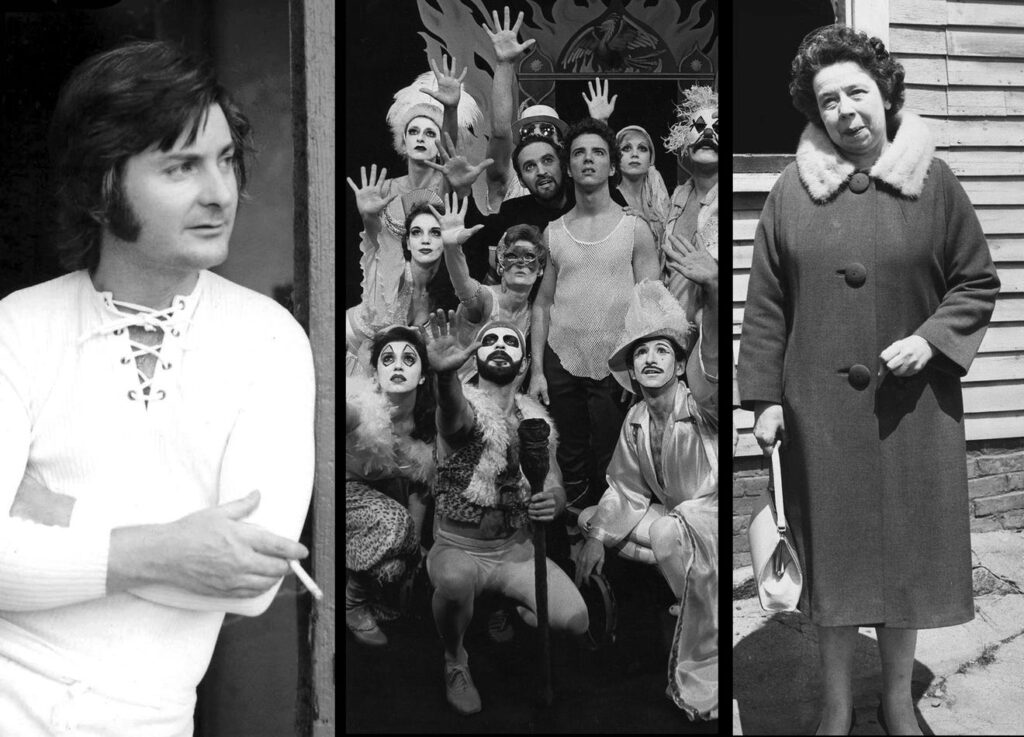
In 1964, a pair of local high school teachers gambled their savings to launch Theatre by the Sea, a tiny but professional repertory company on Ceres Street. Volunteers transformed a dank, rat-infested grain warehouse on the waterfront into an intimate performance space. Word spread quickly, attracting audience members from as far away as Boston to the handmade, sometimes leaky 100-seat theater. Although Portsmouth was still, according to one reviewer, a “time-worn undistinguished town,” the TBS actors were top-notch and the plays were daring and sophisticated. People from elsewhere took notice.
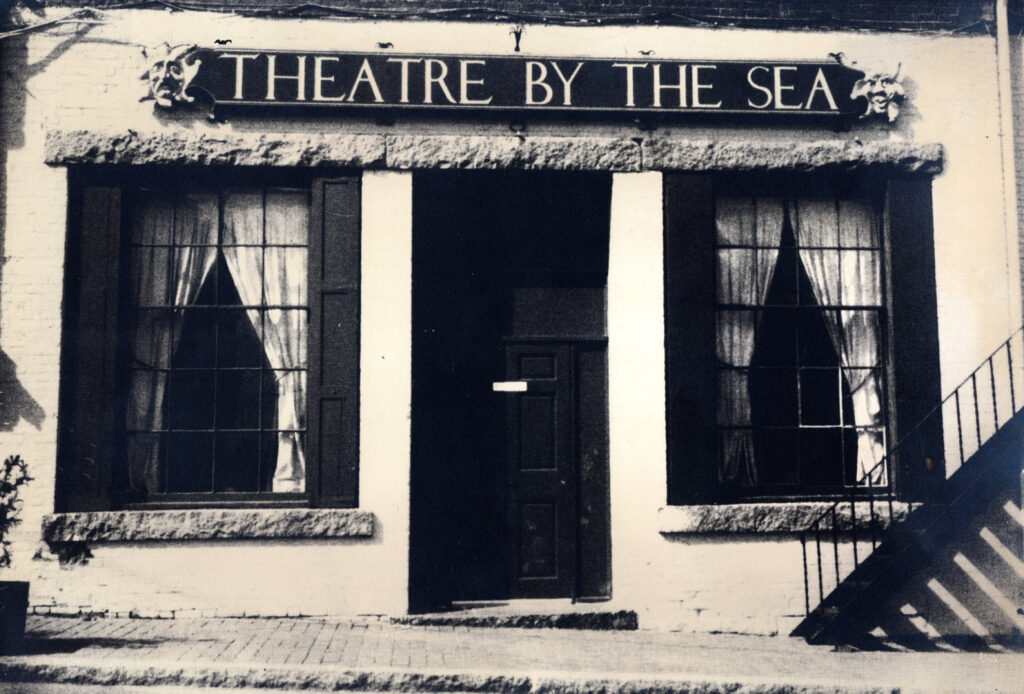
Despite critical raves, within a year TBS was near financial collapse. Although actors were being paid only $50 per week (an estimated 59 cents per hour) the nascent company needed $50,000 to stay open. One supporter, writing to the Portsmouth Herald, claimed closing TBS would be “a smear on the reputation of Portsmouth,” and would prove “we are a narrow, tight, small-minded group of people.” Benefactors stepped up. Within months the theater was back on its feet, and the second pillar in the Portsmouth Renaissance appeared.
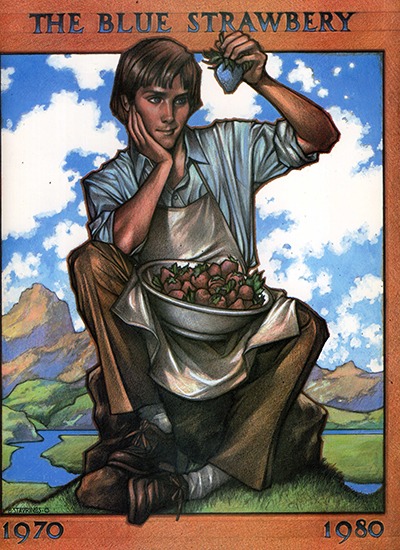
Residents often note with more nostalgia than fact that few dared walk down Ceres Street until the arrival of TBS. “Once decayed and wino-haunted,” the Boston Globe reported, the narrow waterfront alley soon became “chic and fashionable.” The metamorphosis was complete, travel writers reported, with the 1970 opening of the Blue Strawbery by owner James “Buddy” Haller. His tiny gourmet restaurant was half hidden in an old brick warehouse just a few paces from Theatre by the Sea. Haller’s funky-yet-sophisticated menu created an alluring new destination in a hard knuckle town amid scenic red tugboats and sleazy topless bars.
Reporters love patterns. By the early 1970s, with the addition of the third pillar, the Portsmouth Renaissance was going full throttle. The three “epicenters,” according to the NH Times – an alluring blend of history, arts and fine dining – made New Hampshire’s only seaport worth exploring. In 1982, US News & World Report published a full-page feature titled “Old New England Port Rescues its Vanishing Charm.” Portsmouth, the reporter cooed, had a “growing reputation as a little town with urbane ways.” Dorothy Vaughan, never at a loss for a pithy quote, told US News, “We’ve hit rock bottom. We’re coming up.”
It takes a village
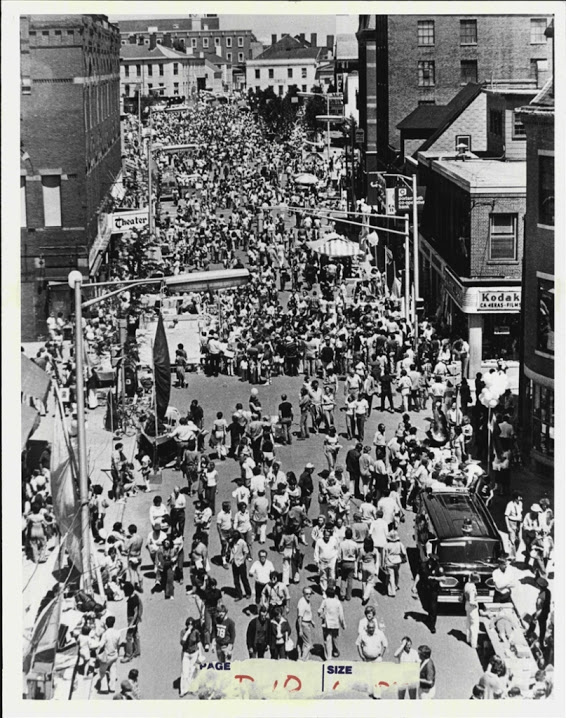
History oversimplifies. If it were not for Dick Morton, for example, who owned the brick buildings along Bow and Ceres streets, there would have been no Theater by the Sea. Without money from the Prescott siblings – Charles, Josie and Sarah – we would not have Prescott Park. Without TBS and painter Rose Labrie’s Strawbery Banke art classes for children, there might be no Prescott Park Arts Festival. TBS eventually went bankrupt, but gave birth to Seacoast Repertory Theatre.
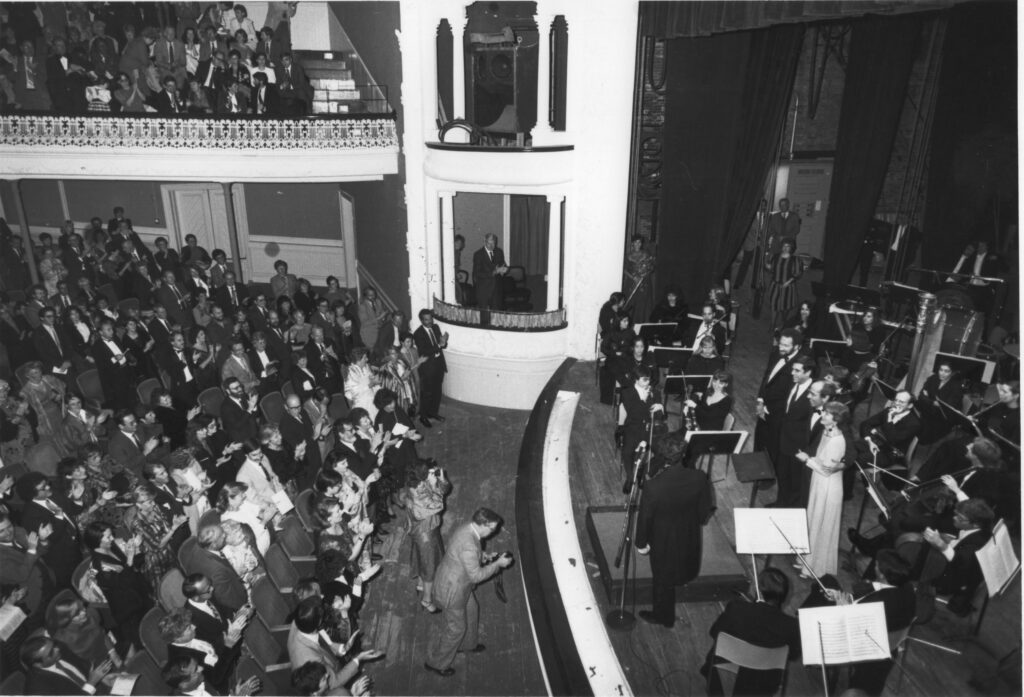
Without Bob Thoresen’s redesigned tourist-friendly downtown, there would be no Market Square Day, no First Night, no Halloween Parade. Without Valerie Cunningham, no Portsmouth Black Heritage Trail, and without the trail, no African Burying Ground Memorial. Without developer Joe Sawtelle, we would have no USS Albacore Park. Without Jay Smith there would be no Press Room music scene, and without his anonymous $250,000 loan at a critical moment, no reborn Music Hall. Today, the Boston Globe hails The Music Hall as the “beating cultural heart of the New Hampshire seacoast.” But without the original 1878 Music Hall, there might never have been a Theater by the Sea, a Blue Strawbery or a Strawbery Banke Museum.
The Portsmouth Renaissance, of course, is a reference to the city’s original economic and cultural heyday some 200 years ago. But Portsmouth could not have been “reborn” until it had peaked and crashed in the early 1800s. In the 1970s and 80s, once word got out, change quickly begat change. Fine restaurants like the Dolphin Striker and the Galley Hatch opened on either end of Ceres Street. Unique stores like Salamandra Glass, the Trunk Shop and Macro Polo filled in the gaps. TBS was soon joined by a cluster of even smaller theater groups, two-mime troupes, a ballet company, and a jazz and dance ensemble. Tall ships, courted by local businessmen, began to arrive in summer. Dance clubs sprouted across town.
“I know of no other place in the country,” musician Harvey Reid wrote in 1987, “where there is so much good live music per capita.” The tiny town, one reporter noted, suddenly offered a “bewildering string of bars and nightclubs,” plus eateries, shops, festivals, parks and museums galore.
Where to from here?
In Europe, the Renaissance lasted for centuries. We should be so lucky. More likely, from this reporter’s point of view, Portsmouth is almost fully reborn. We’ve been gentrified up to our eyeballs. From this point, every new hotel room, restaurant, gift shop, cobblestone driveway and mime troupe is merely a bonus. And if my high school history teacher was correct, what comes next is the Age of Reason.
What’s reasonable now is to look back, look around and think ahead. Cities evolve in ways that please some residents and dishearten others. What happened during our recent renaissance was both a cultural and an economic recovery. We must remember that it was a theater, a restaurant and a museum – three risky bootstrap ventures – that caught the attention of the outside world. That momentum grew. The excitement attracted tourists, drew creative young people and inspired both entrepreneurs and nonprofit groups. Then came the money people.
“Portsmouth today is a magnet for people and money,” the NH Times reported in 1981. How prophetic. And yet, according to a 1983 survey by students at the University of New Hampshire, only 5 percent of residents were supporting local history or arts organizations. The money needed to fuel the Portsmouth Renaissance, researchers concluded came “almost entirely from people outside the area.”
Those statistics have certainly improved. But it is worth noting, once again, that most of the people who powered the city’s revival also came from elsewhere. Philanthropist Joseph Sawtelle, TBS director John Kimball, city planner Bob Thoresen, Press Room owner Jay Smith, actor Scott Weintraub, and librarian Dorothy Vaughan were all from somewhere else. Even Portsmouth Herald editor and owner Ray Brighton, who loved to taunt the carpetbaggers, was himself from out of town.
And so were most of us, the low-income soldiers of the creative army who came from everywhere to live and work inside the broken kingdom – the performers, artists, musicians, chefs, carpenters, teachers, artisans, writers, waiters, entrepreneurs and more. But freelance writers like me don’t live in luxury apartments of buy million dollar condos. With the average Portsmouth home now selling for well over $500,000, the creative army is pitching tents somewhere out of town.
Mission accomplished. The Portsmouth Ren. aissance worked, and by now the whole world knows it. But we need to begin the Age of Reason with a new and mature game plan. Portsmouth’s revised goal must to be to slow its growth and hold the line. From here our job is to keep our unique shops, museums, historic sites, theaters, galleries and festivals alive. Without them, as Dorothy Vaughan warned in 1957, we could gentrify ourselves into Anywhere, USA.
With the creative army and service workforce no longer living in low-rent apartments downtown, the job of keeping Portsmouth thriving in the Age of Reason falls, once again, to our most recent residents. But this time the new arrivals are frequently people of means. They have moved here, not to fix a broken kingdom, but to enjoy its flourishing quality of life.
If you are one of them – the proud new owner of a Portsmouth home, condo or business – we welcome you with open arms. We need you. To be honest, we need your money, as much of it as you can spare.
Please don’t take the Portsmouth revival for granted. It is unsustainable. Our nonprofit cultural institutions cannot survive on tourism alone. In the upcoming Age of Reason, you are the new heroes. Each time you attend a performance, buy a local book or piece of art and visit an historic house – you are keeping a fragile economic ecosystem alive. Better yet, put your money to work. Join as many nonprofit groups as you can afford, sponsor a cultural project, or create an endowment.
It was a long time coming, but we did it. The city’s second Golden Age has arrived – and its survival is in your hands.
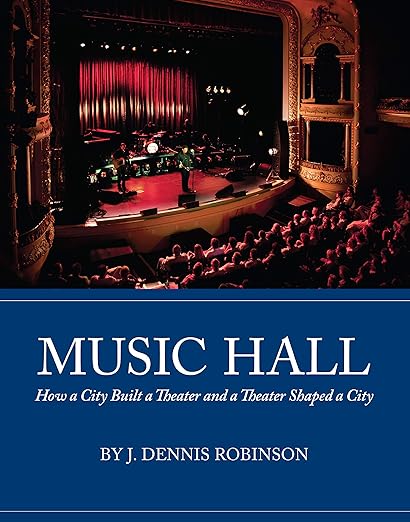
Copyright 2018 by J. Dennis Robinson, all rights reserved. Research for this article was supported, in part, by the Friends of the Music Hall for the author’s book on the history of Portsmouth arts and culture.
 Hotel Wentworth Opens in 1874