


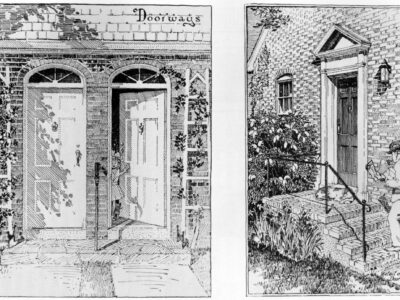

My annual plug for the annual Atlantic Heights Garden Tour has lots of history behind it. I sweat each year over my tenth-of-an acre speck of greenery to get ready. My neighbors and I are well into our third decade of this event, but there’s more to the story than meets the eye.
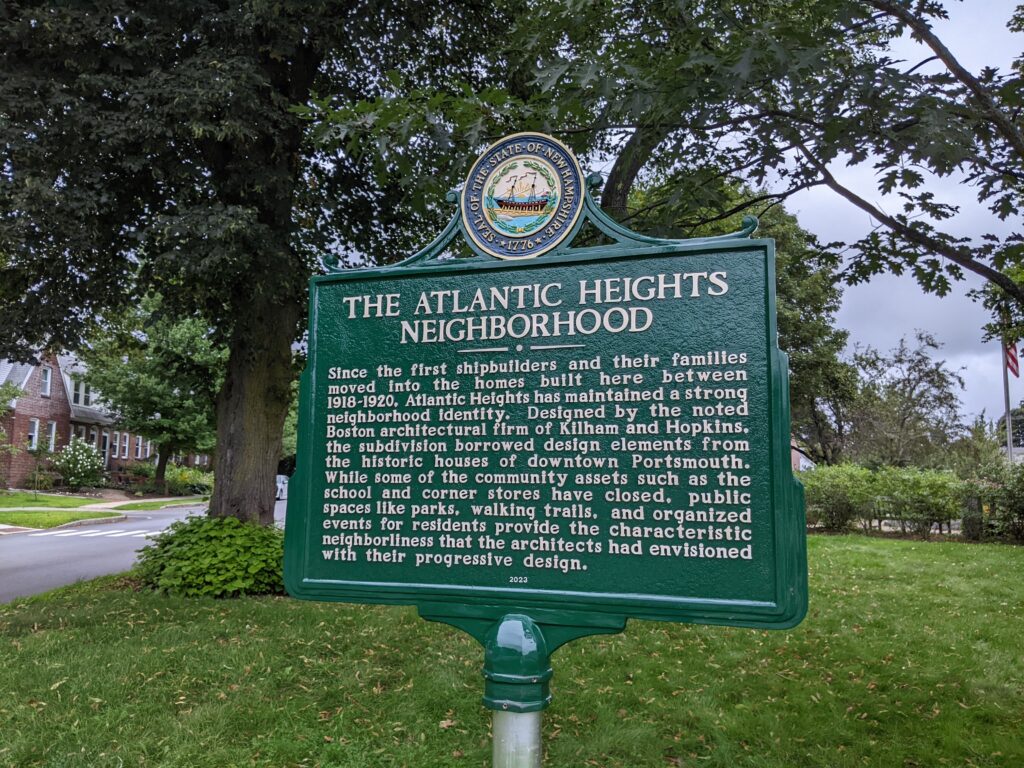
Only one road, Kearsage Way, leads to and from “The Heights” huddled beneath the towering Interstate halfway between the city’s bustling Market Square and the malls of Newington. One way in, one way out. People often miss that road on their first visit. Kearsage Way, named for a famous Portsmouth ship built in the Civil War, leads to a cluster of roads named for other Portsmouth-built ships: Ranger, Porpoise, Raleigh, Preble, Falkland, Saratoga. Many lifetime Portsmouth residents have never seen the crisp rows of small homes created in the architectural style of the English Garden-City Movement.
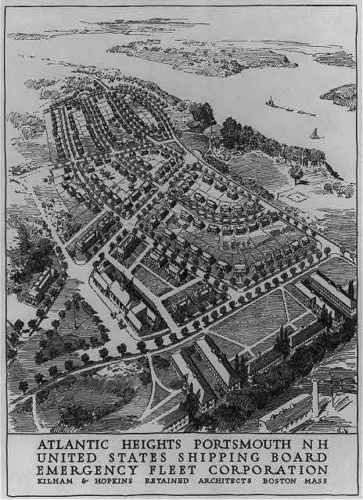
That design concept evolved from the work of English town planner Sir Ebenezer Howard, who imagined ideal self-sustaining villages adjacent to industrial work areas. Transplanted to America in the early 20th century. In a nutshell, the idea was to build entire communities of artistically pleasing low-income homes on peaceful open land. The designers argued that poor workers, especially ethnic immigrants, would become happier, more patriotic American citizens if they did not have to live in a crowded slum.
With World War I approaching, the federal government needed lots of large new freighters built quickly. The Atlantic Corporation, located in an old paper factory on the river near Portsmouth, received a lucrative contract to construct ships for Uncle Sam. The new company needed scores of skilled workers quickly, and Atlantic Heights was born.
The original complex included 278 units in 150 detached, semi-detached and row houses with one-to-six families per building. There was also a series of worker dormitories, a brick store block, cafeteria, and school. Workers walked en masse to the shipyard nearby, or traveled by trolley.
Unfortunately, the Atlantic Corporation closed quickly. The war ended suddenly, and the entire complex was sold a few years later in a two-day auction. A colorful poster from 1925 announced, “Uncle Sam is going out of the landlord business.” Workers who could come up with 30 percent of the auctioned cost were allowed up to three years to pay the balance at six percent interest. Most could not, especially with the shipyard closed, and for decades a small cluster of landlords ruled “The Heights” under one central property manager who lived in the village.
Times change. Portsmouth’s low income neighborhood is now gentrified and our protery taxes reflect the rapid rise. A century after they were built, one thing remains the same. Atlantic Heights is still a “garden city” with pocket gardens flourishing throughout the city’s hidden neighborhood.
Copyright J, Dennis Robinson
 Slowly Killing the Assembly House