

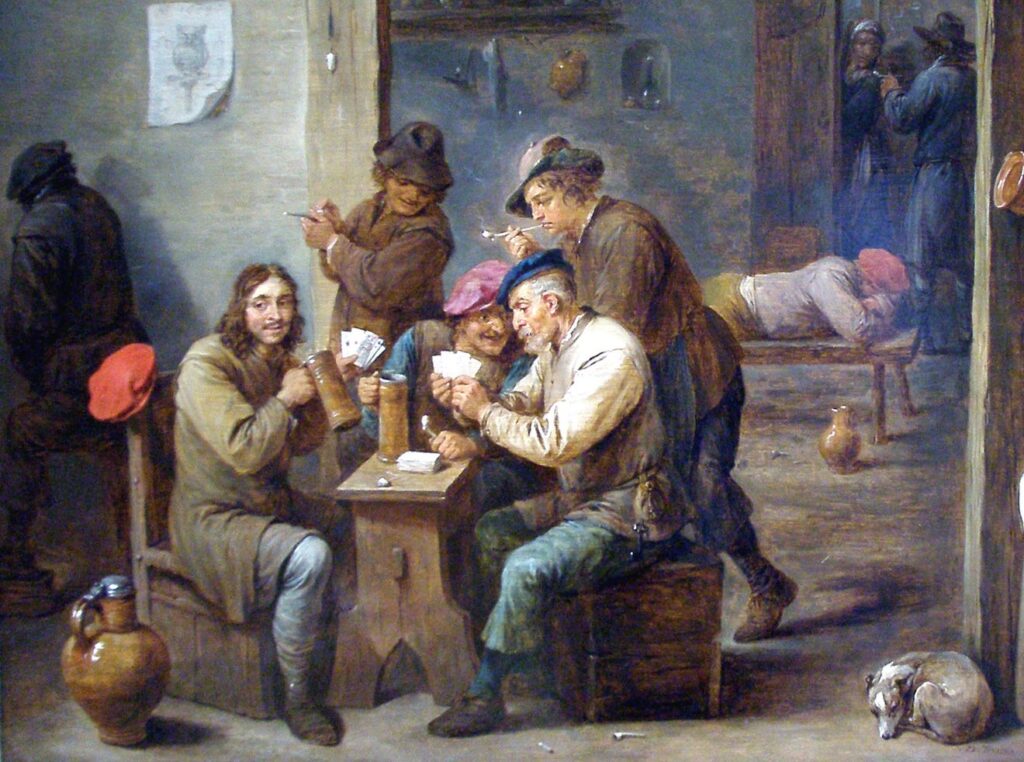
In the spring of 1652, the “Select Men” of Strawberry Bank met secretly at George Walton’s tavern on Great Island, not far from the lighthouse in modern-day New Castle. They pulled out the “town book” and crossed out the entries they didn’t like. They started a fresh new record book, inserting only the unredacted facts.
Two centuries later historian Charles Brewster regretted that five powerful men – Henry Sherburne, Brian Pendleton, Renald Fernald, John Pickering, and James Johnson – had deprived future generations of key facts about Portsmouth’s first decades. Langdon Parsons, author of a history of the town of Rye, called the 1652 act “as audacious and indefensible a piece of official rascality as ever was perpetrated.” Early New Hampshire historians claimed, without proof, that the original Portsmouth records were “destroyed” or “burned.” After extensive study, lawyer Frank Hackett suggested in 1886 that the precious handwritten pages of the original record might still someday be uncovered.
“The mystery that envelops it,” Hackett wrote “…stimulates a desire to fathom its meaning.” But the mystery came with a warning. “Whoever applies himself to a study of the Portsmouth records will surely find in the brief entry that recites their mutilation, a source of almost never-ending perplexity.”
A quick background check
Hackett was right. Early New Hampshire history is a mess. We have only scraps of information about a population of settlers who dressed, talked, smelled, lived and thought in ways we can scarcely imagine. Remember that New Hampshire’s first known English settlers, a handful of fishermen led by David Thompson, landed at what is now Odiorne’s Point at Rye in 1623. But Thompson was gone by 1627, off to claim land at what would soon become Boston Harbor, where he apparently died of disease or by accident. His fortified and largely abandoned “stone house” was reclaimed by the next group of English settlers who arrived in 1630.
The Strawberry Bank settlement was a risky commercial venture funded by Capt. John Mason, a former military man from Portsmouth, England. The “first planters” built a communal “great house” across from modern-day Prescott Park. It was surrounded by a ditch or moat and protected by a cannon, small arms and a tall palisade. The 66 men and 22 women were tasked with finding precious metals, trading for Indian furs, and searching for a northwest ocean passage to the Orient. It didn’t go well. The company went bankrupt in 1634 and Mason died suddenly the following year, without ever seeing his colony. Mason’s widow, Anne, left the colonists to fend for themselves in a harsh New World.
Meanwhile, more than 20,000 English Puritans emigrated to Massachusetts under leader John Winthrop. Some moved north, escaping from harsh Puritan laws and religious practices, to the region between the Merrimack and Piscataqua rivers. The Rev. John Wheelwright, cast out of Massachusetts for his beliefs, gathered a group of followers at Exeter in 1637. Winthrop complained into his journal that the people of “Pascataquack” openly defied Puritan justice by sheltering outlaws like Wheelwright. “It was their usual manner (some of them) to countenance … all such lewd persons as fled from us to them,” he wrote.
What would become the New Hampshire seacoast was populated largely by fishermen, Royalist adventurers, and by squatters left over from John Mason’s failed plantation. These locals were more tolerant toward “antinomians,” including Quakers, who believed they could get to heaven without the help of the Puritan church. Puritans, from their perspective, wanted to save sinful Piscataqua inhabitants from their godless, drunken, lawless, immoral ways. Those are our founders.
There were many ways to take control. Massachusetts continually tried to absorb coastal New Hampshire by legally shrinking its borders. With an eye toward eventually dominating the region, they sent a Puritan minister named Stephen Bachiler to build a colony at nearby Hampton in 1638. Another Puritan, Thomas Wiggin, set up his residence at Sandy Point (Great Bay) not far from the fishing outpost at Hilton Point, established in 1628. Wiggin would become an influential figure at the future town of Dover.
Puritans closing in
By 1640, the four New Hampshire plantations were, therefore, quite distinct and largely self-governing. The population at Strawberry Bank colony was largely located on Great Island (New Castle). The sprawling territory claimed in the Mason patent also included much of the future town of Rye, parts of Greenland and Newington, plus a trading post at Salmon Falls and fishing sites at the Isles of Shoals. Its rowdy reputation, to be honest, was well deserved. Thomas Wannerton, for example, who took over the “great house” after Mason’s death, was accused of drinking, wife beating and stealing. George Walton, who ran the Great Island tavern, was fined for swearing, selling overpriced wine, missing church services and constructing unauthorized fences. It was Walton, decades later, who would be the target of the legendary “stone throwing devil” that pelted him and his property with flying rocks.
Business was picking up along the Piscataqua. Fishing was profitable, as was the milling and sales of the region’s tall white pines. A fledgling maritime industry of trade and boat building was on the horizon. But life was also scary in the wilderness. By 1643 Dover, Exeter and Hampton had all agreed to be taken under the protective wing of Massachusetts Bay Puritans. Strawberry Bank, however, continued to resist. When the roguish Thomas Wannerton died that same year, two successful businessmen, Henry Sherburne and Richard Cutt, took charge of the great house. But there was one thing that frightened Strawberry Bankers more than pirates, Indians, wild animals and Puritans. They feared losing their land.
The Masons return
In 1650, John Mason’s widow, Anne, tried to reclaim her land. The Mason’s legal claim to New Hampshire had always been a little shaky. So Mrs. Mason sent Joseph Mason, a kinsman, from England to the Piscataqua frontier to see what was left of the settlement she had abandoned 15 years before. Joseph Mason discovered that most of the original buildings had been torn down, the cattle sold off and the valuable real estate dominated by squatters. There was “nothing left but the bare lands and the monuments of ruin,” he reported back to England. After threatening to evict the Strawberry Bankers, Mason took his case to the General Court of Massachusetts. The Puritan court initially agreed that a sawmill operating at Newichawannock (South Berwick) belonged to the Mason family.
Suddenly, the Puritans were the lesser of two evils. In October 1651, Strawberry Bank (Portsmouth) petitioned to be taken under the protection of Massachusetts. There was a catch, however. The Puritans had to agree to honor all Strawberry Bank land grants made within the previous five years. Better to slowly assimilate the heretical Piscataqua residents, the Puritans likely decided, than to turn over half the valuable waterfront to the Royalist Mason family. So Strawberry Bank joined its sister towns under Massachusetts control.
What happened here mirrored the bloody politics going on in England. During the British Civil War in the 1640s, as Oliver Cromwell, the “Puritan Moses,” was defeating the British king, the Piscataqua region was left pretty much on its own. But after King Charles was beheaded (1649) and Parliament shut down by Cromwell’s militia (1653), Puritans in New England were emboldened. Across the river in Maine, Kittery was also taken under Massachusetts control (1651) as was Agamenticus or York (1652).
But Cromwell’s control was short-lived and the monarchy was restored in 1660 under King Charles II. Cromwell’s dead body was exhumed, put on trial, hanged, and his head was displayed on a pole outside Westminster Hall. In 1680 Charles II turned New Hampshire into a separate royal province, but it remained under the influence of Massachusetts until well into the 18th century. The Mason family would try and fail, once more, to lay claim to the region. Portsmouth would remain a rowdy buffer zone between Massachusetts and Maine.
Back at Walton’s tavern
Sherburne, Fernald, Johnson and Pickering were all longtime Piscataqua residents when they were elected “townsmen” with enormous power to manage life at Strawberry Bank. Brian Pendleton, however, was a newcomer. Likely born at London in 1599, he had been living comfortably in Massachusetts for almost 20 years before buying property on Great Island. Like Mr. Wiggin in Dover and the Rev. Bachiler in Hampton, Pendleton was apparently sent to the Piscataqua region to work with the troublesome locals and to bring them under the “Puritan model” of an orderly church-going town. The arrival of Joseph Mason, who threatened to take ownership of Strawberry Bank, was closely followed by Pendleton’s appearance here.
FB Sanborn, writing about Pendleton for the Granite Monthly in 1903, saw him, not as a Puritan spy or agitator, but more of an ambassador. Rewriting the ragged town book on April 5, 1652, was not “a reckless piece of business” by the five men, says Sanborn. They cleaned up unsavory incidents and clarified the ownership of land and property, Sandborn writes, “I believe, in good faith, and for the good of the colony at Strawberry Bank.”
Some squatters were probably written out of the town records and lost their land. And the selectmen in charge certainly took more than their fair share. But some 46 Strawberry Bank families also gained official title to their property at that meeting, plus a much-needed dose of security in dangerous times. More land grants would soon follow.
Our founders were not, for the most part, independent thinkers. They accepted class distinctions that gave some men greater power, wealth, and influence. Pendleton’s Puritan town model increased church attendance, enforced a working militia, created a town common and town pound, imposed regular town-meetings, promoted the election of town officials, developed local courts for minor infractions, and established common connections between other Puritan-managed towns in the wilds of New England.
The rabble-rousing squatters and fisherman of the Piscataqua were, in their own unique way, beginning to unite and mature. A year after bending to Puritan control, and perhaps to ease tensions with the Mason family, the town “accidentally named Strawberry Bank” petitioned the Massachusetts court to change its name to something more respectable and appropriate. They rebranded themselves as “Portsmouth” in honor of Captain John Mason of POrtsmouth, England. It was a gift in name only.
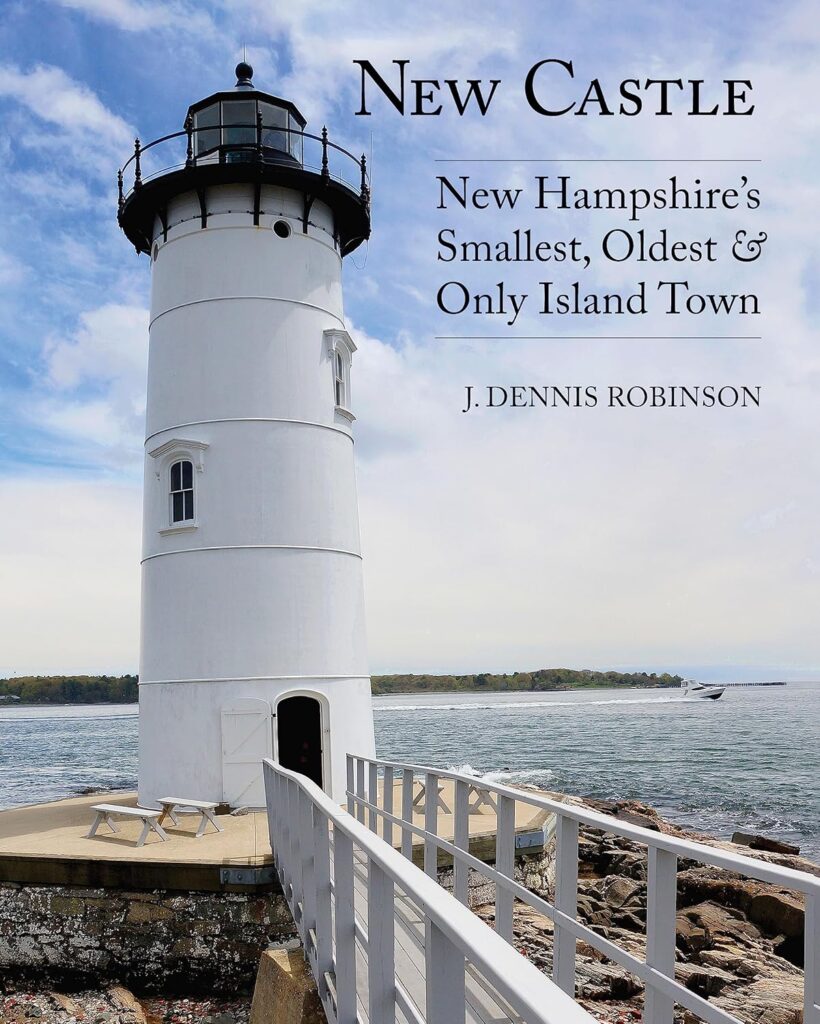
SOURCES: See local history books by Nathaniel Adams, John Albee, Scott Auden, Emerson Baker, Jeremy Belknap, Charles Brewster, Charles Clark, Jere Daniell, Charles Deane, Frank Hackett, John Scribner Jenness, Langdon Parsons, F.B. Sanborn, and Dave Van Deventer. Copyright 2017 by J. Dennis Robinson, all rights reserved. Portions of this essay appear in the book “New Castle. NH’s Smallest, Oldest, and Only Island Town.”
 Forgetting the Atlantic Corporation