


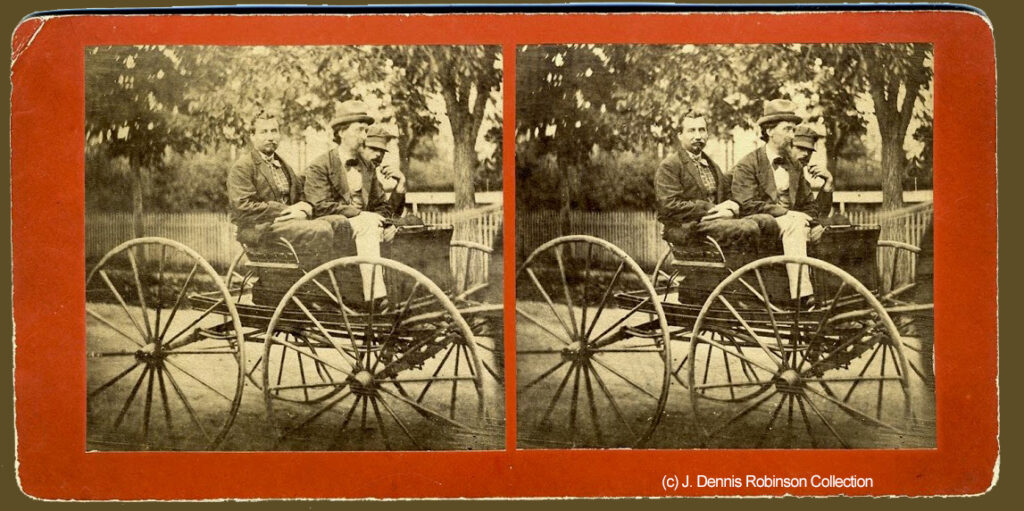
Early on March 6, 1873, a fisherman named Louis Wagner abandoned his stolen dory and walked from New Castle, NH towards Portsmouth’s dilapidated South End. Although he denied ever being there, half a dozen witnesses later testified they saw Wagner en route that morning. He arrived at Johnson’s boarding house, where he was six weeks behind on his rent. His eyes were wild, his face wind burnt, and his clothes spattered. The stains, Wagner explained, were fish blood. Disheveled and too exhausted to eat breakfast, he suddenly rushed off to catch the morning train from Portsmouth, NH to Massachusetts.
That same day, after cutting his beard and buying new clothes, Wagner was arrested in Boston. Charged with killing two women at the Isles of Shoals, he said nothing. Escorted back to Portsmouth the following morning, Wagner and his police guards had to battle their way through a lynch mob of thousands waiting at the train station.
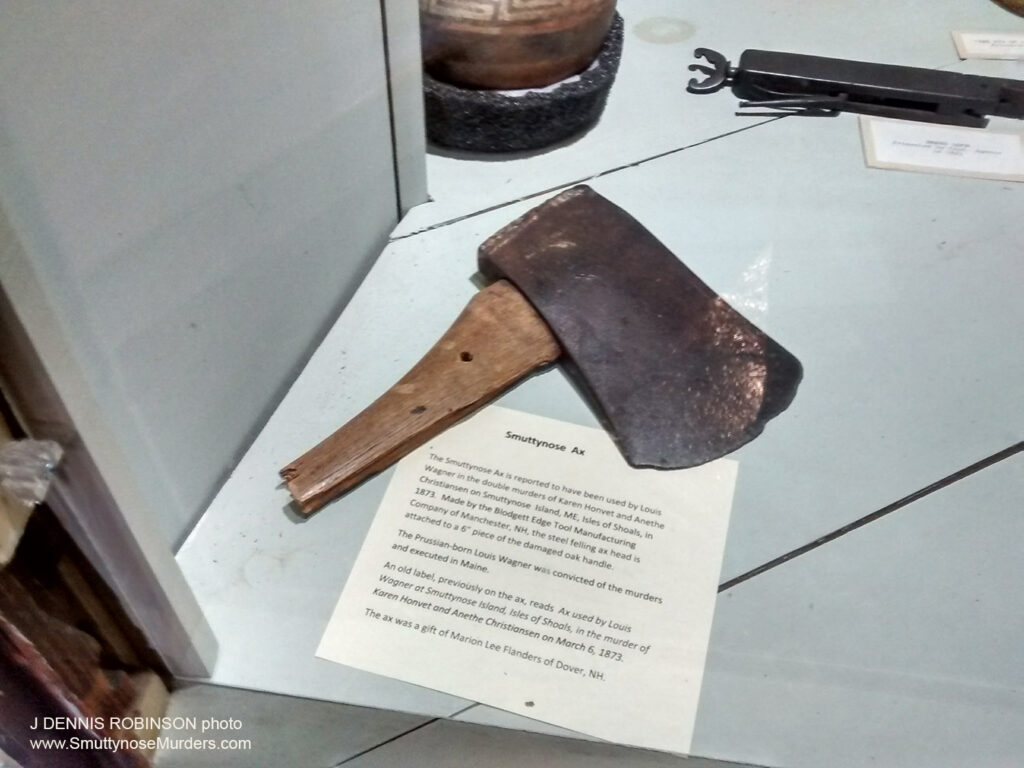
The moonlight murders on Smuttynose Island are arguably the best-known true crime tale in Portsmouth history. But it was the nine-day trial in the summer of 1873 that galvanized the nation. And it was the rarely discussed testimony of Dr. Horace Chase that may have hammered the final nail into Wagner’s coffin.
A new type of evidence
Since Smuttynose Island is officially in York County, Maine, the trial was held in the sleepy “shire” town of Alfred. Prosecuting attorneys Harris Plaisted and George Yeaton delivered a devastating circumstantial case. Although he denied ever leaving Portsmouth, Wagner had been seen by a string of witnesses on the road from New Castle on the morning of the murders. His untouched bed at the boarding house, an unsupported alibi, a bloody shirt found in Johnson’s privy, his flight to Boston, the stolen dollars he spent during his escape, and his familiarity with the victims all took their toll at trial. Maren Hontvet, the surviving victim, testified that she heard her sister-in-law Anethe scream “Louis! Louis! Louis!” as she was cut down by the murderer’s ax.

Then the prosecuting attorneys made a surprise move. They brought in a “blood expert,” all but unheard of in Victorian times. The crime scene on Smuttynose had been smeared with bloody handprints on doorways and dishes. But that evidence was indecipherable to 19th-century investigators. The first use of fingerprints in a high-profile murder would not occur until March 27, 1905, when the killer of two London shopkeepers left a perfect print on a metal money box.
Before modern forensic detection, prosecutors relied on eyewitnesses, snitches, prisoner confessions, and raw logic to get a murder conviction. Because Maren Hontvet had not seen Wagner’s face, and because Wagner had not confessed, the prosecution introduced Dr. Chase to buoy up their circumstantial case.
High-tech speculation
Historians point to the John Webster murder trial of 1849 as the first case in America based on scientific evidence. Webster, a Harvard lecturer, struck and killed his landlord George Parkman with a cane in a fit of rage over an unpaid debt. Parkman was a wealthy Boston Brahmin, and the trial became a media sideshow. Pieces of Mr. Parkman–including his thigh, pelvis, torso, and jawbone–were discovered in a privy and a furnace at Harvard Medical School. The victim was identified from dental records.
By the late 19th century juries were learning that, for every expert opinion, another expert was willing to swear the opposite was true. Expert theories, according to one New Hampshire Supreme Court justice, were so “warped in favor of the side they represented,” that they were “incapable of expressing a candid opinion.” Expert testimony could take days of court time, wearying the judge and often perplexing rather than educating the jury.
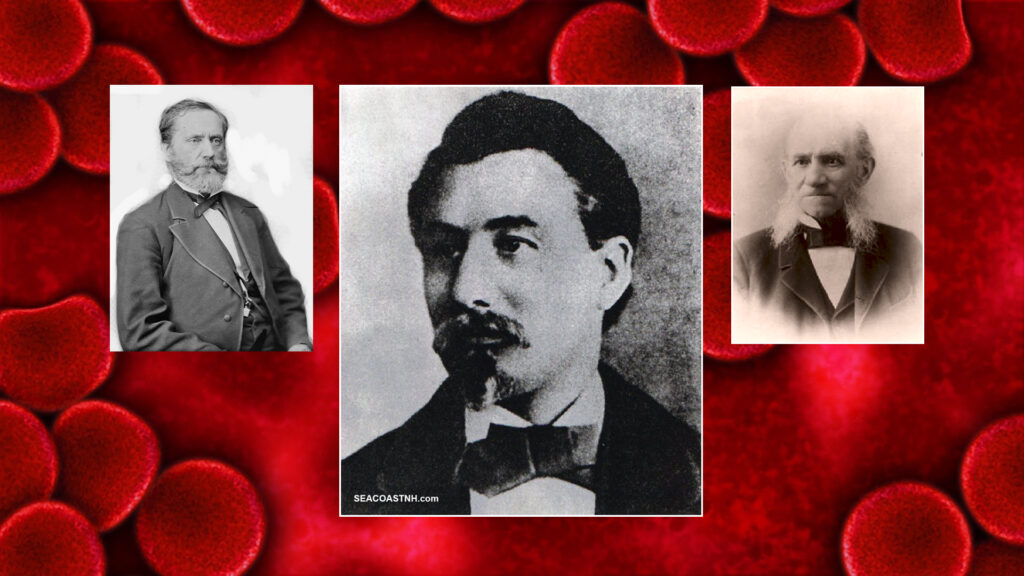
Mercifully, Dr. Horace Chase took only two hours to present his case against Wagner. The proof, Chase explained, was hidden in the corpuscles of dried blood from the defendant’s discarded clothing recovered in Boston. Chase brought the blood cells back to their liquid state, he explained, after soaking them in a serum of glycerin and distilled water for 12 hours. He determined that the blood came from a mammal, based on the shape and diameter of the blood corpuscles.
While fish and birds possess an oval or elliptical red blood cell, Dr. Chase told the jury, humans and animals have round blood cells. A year later, testifying at another trial in New Hampshire, Dr. Chase claimed he could tell the difference even with a bloodstain that was 10 years old. Seen under a microscope at 400 times normal size, he testified, the human corpuscle “resembles very much a small India rubber ball” pressed with the thumb so that it leaves the edge rounded down to what is called “a concavity.”
The cells on Wagner’s clothes were human, not “fish gory,” Chase concluded. Each human cell measured roughly 1/3,200th of an inch, which Dr. Chase said he measured using a hand-held micrometer. Having tested many stains many times over many hours, Dr. Chase was absolutely convinced the blood was from the two murdered women.
Ahead of his time

Ahead of his time?
While the forensic study of bloodstains was possibly the most important advance in the crime detection until the science of DNA, Dr. Chase was not the expert he imagined himself to be. The Chinese experimented with bloodstain analysis as early as 1,250 AD. But it was not until 1900 that Austrian immunologist Karl Landsteiner was able to observe the clumping and repelling of different blood types. Armed with this knowledge, police detectives could finally compare blood types and the age of forensic science was born.
Dr. Chase, however, had learned about blood corpuscles from an 1858 book, Taylor’s Medical Jurisprudence. During cross-examination, Wagner’s attorneys, Rufus Tapley and Max Fischacher, challenged Dr. Chase. Did he know Taylor’s textbook warned that efforts to distinguish between horse blood and human blood in criminal cases “is speculative and may be considered unsafe to rely upon?”
“It probably would be for a man that had no experience,” Dr. Chase shot back. “I believe those persons who say they cannot distinguish with certainty, are not competent to make the examination.” Chase was right, therefore, because he thought he was right.
Pressed by the defense team to swear Wagner’s clothes were spattered in the blood of Anethe and Karen Christensen, Dr. Chase admitted his analysis should be “received with caution.” Wagner’s frustrated attorneys may have wished they could shout, as did one of their Victorian colleagues: “Gentlemen of the jury, there are three kinds of liars– the common liar, the damned liar, and the scientific expert.”
Bloody epilogue
The all-male Maine jury quickly found the defendant guilty of murder. After a daring escape from the prison at Alfred, Louis Wagner was recaptured and later hanged at Thomaston Prison. Wagner continued to protest his innocence and, in his final days, claimed Maren Hontvet, who had eluded him by hiding among the rocks on Smuttynose Island, had killed her sister and sister-in-law. An amateur phrenologist, who measured Wagner’s skull after his execution in 1875, published a “scientific” analysis. The perfect shape of the prisoner’s head, the junk scientist claimed, proved Wagner was incapable of murder.
Dr. Chase, meanwhile, had reached the correct conclusion using bogus science. Years later, in a strange sidebar to the Wagner case, it was Dr. Chase who many suspected of murder in a scandalous Boston trial. Chase, a widower, had married a wealthy Massachusetts socialite. Her fortune, however, was tied up in a legal trust that prevented her new husband from inheriting a million dollars.
Chase had convinced his second wife to adopt his adult son from a previous marriage. When Mrs. Chase mysteriously died in 1905, her adopted son and only direct heir stood to inherit her money. But the young man died suddenly of an apparent suicide soon after. Dr. Chase later testified he had married his second wife for love, not money, but he insisted the million-dollar inheritance belonged to him. Despite suspicions, Dr. Chase was never indicted for the murder of his wife or son, but the Massachusetts court denied him the inheritance. Wagner’s “blood expert” put up a fierce legal battle over the money, but without success.
Copyright 2020 by J. Dennis Robinson, all rights reserved, revised in 2025. Portions of this article were excerpted from the author’s book Mystery on the Isles of Shoals: Closing the Case on the Smuttynose Ax Murders of 1873, available on Amazon.com and Audible.com
 Judge Woodbury Langdon, Impeached in 1790