

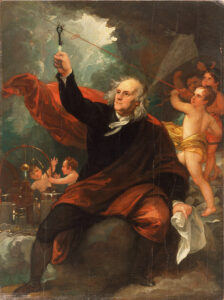

I’m getting a reputation as a skeptic and a debunker. That stings. The historian’s job is to dig deep and present the facts. Unfortunately, so much of what people know about the past is based on legends, myths, and folklore. So historians often say, “Well, that didn’t really happen, but it’s a great story.”
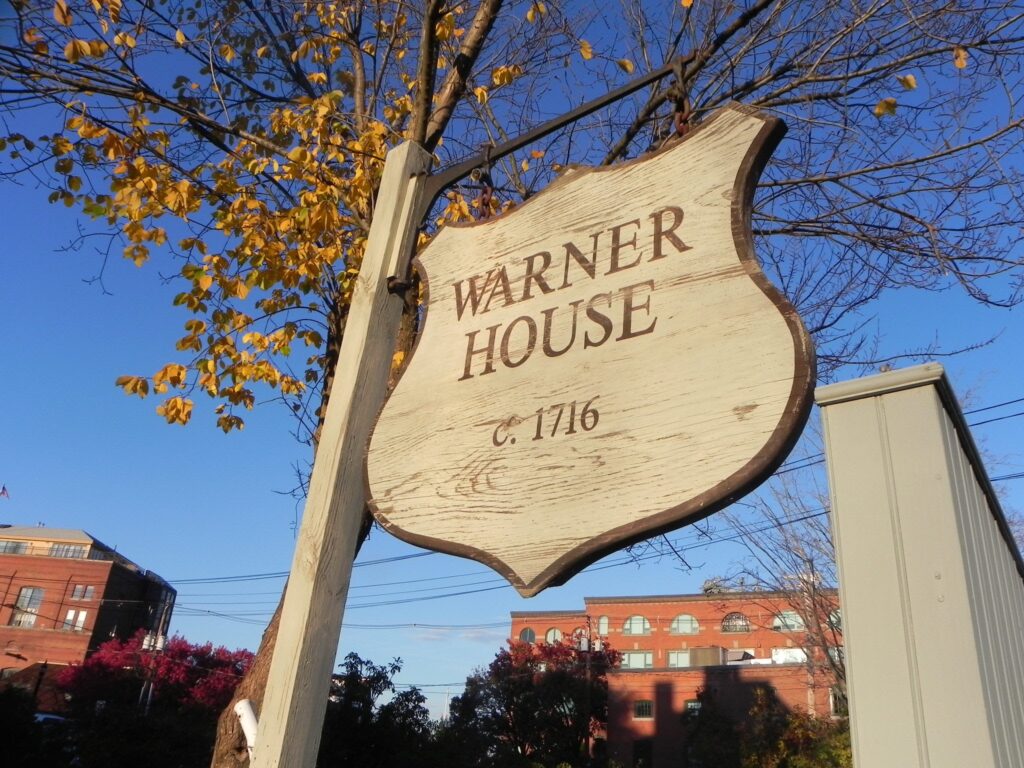
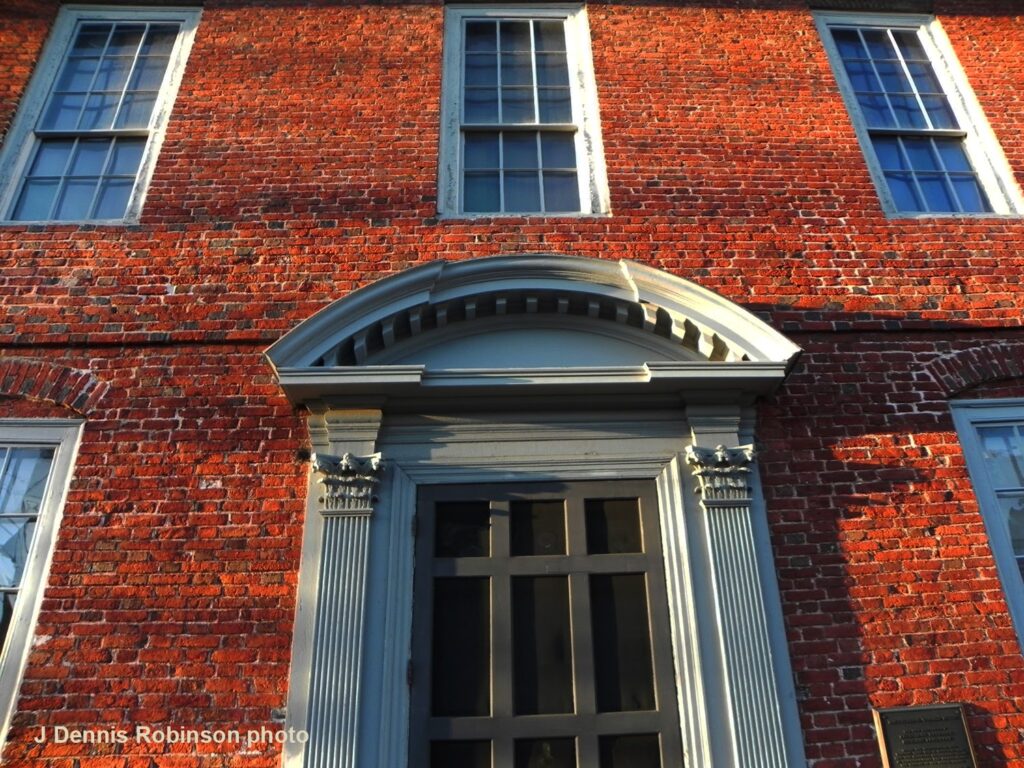
This month, I bring joyful news. It looks like the iron lightning rod on the historic Warner House in Portsmouth, NH is extremely old. Legend says the crude, pointed, metal shaft was placed there by Benjamin Franklin. Ben certainly didn’t climb up the side of the 1716-era brick house. He had taken a bad fall when he visited Portsmouth in 1763 and was recuperating. But he may have “conducted” the installation of the lightning rod. The chunk of metal used to ground the “Franklin Rod” has been unearthed and declared authentic by an archaeologist.
We were still a British colony in 1763, a dozen years away from the American Revolution. Ben was the Deputy Postmaster for King George III at the time. He was making the rounds of all the colonies, setting up post offices, and improving mail delivery. The owner of the house at the time, Jonathan Warner, was a wealthy merchant with close ties to the British aristocracy. So far, so good.
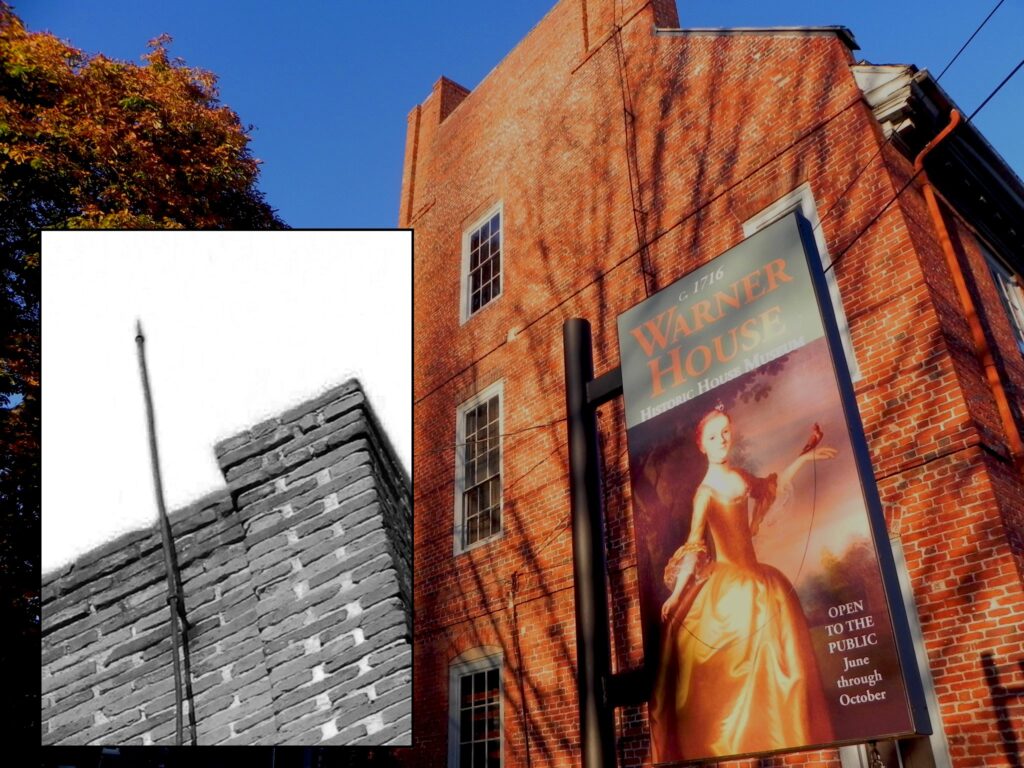
We have no hard evidence that the two men met. But in a small, but important seaport like Portsmouth, it is more than likely. Ben was super famous for his experiments in electricity. His Poor Richard’s Almanack was well known. He was among the richest men in the colonies, America’s first millionaire, some say. The Warner House was among the most magnificent and tallest buildings in town at the time. If it walks like a duck and quacks like a duck — I’m ready to believe this legend has legs.
For much more, read The Warner House: A Rich and Colorful History (2006), edited by Joyce Volk. Visit the official website for tours and events.
The story, like so many in town, can be traced to an essay by Portsmouth Journal publisher Charles W. Brewster. When his Rambles About Portsmouth was republished in 1873, a Boston newspaper mocked the Ben Franklin claim, suggesting that Thomas Jefferson might also have been in town selling stove polish. But the definitive history of the city’s most amazing historic house sees no reason to doubt the story.
We have no hard evidence that the two men met. But in a small, but important seaport like
Portsmouth, it is more than likely. Ben was super famous for his experiments in electricity. His Poor Richard’s Almanack was well known. He was among the richest men in the colonies, America’s first millionaire, some say. The Warner House was among the most magnificent and tallest buildings in town at the time. If it walks like a duck and quacks like a duck — I’m ready to believe this legend has legs.
The story, like so many in town, can be traced to an essay by Portsmouth Journal publisher
Charles W. Brewster. When his Rambles About Portsmouth was republished in 1873, a
Boston newspaper mocked the Ben Franklin claim, suggesting that Thomas Jefferson might
also have been in town selling stove polish. But the definitive history of the city’s most amazing historic house sees no reason to doubt the story.
For much more, read The Warner House: A Rich and Colorful History (2006), edited by
Joyce Volk. Visit the official website for tours and events.
 Yes, That Was Me on Fox TV